
With energy bills continuing to rise across the UK, homeowners are searching for smarter, greener, and more cost-effective ways to heat their homes. One technology that has rapidly gained popularity is the air source heat pump. However, many people still ask the same question: Can air source heat pumps really work efficiently during cold UK winters?
The answer is yes. Modern air source heat pumps are specifically designed to operate efficiently even in freezing conditions. Thanks to advanced heating technology, improved compressors, and intelligent controls, these systems can continue delivering reliable heating and hot water even when outdoor temperatures drop well below zero.
In this guide, we’ll explain how air source heat pumps perform during winter, their efficiency levels, running costs, benefits, and why they are becoming one of the most popular renewable heating solutions across the UK.
What Is an Air Source Heat Pump?
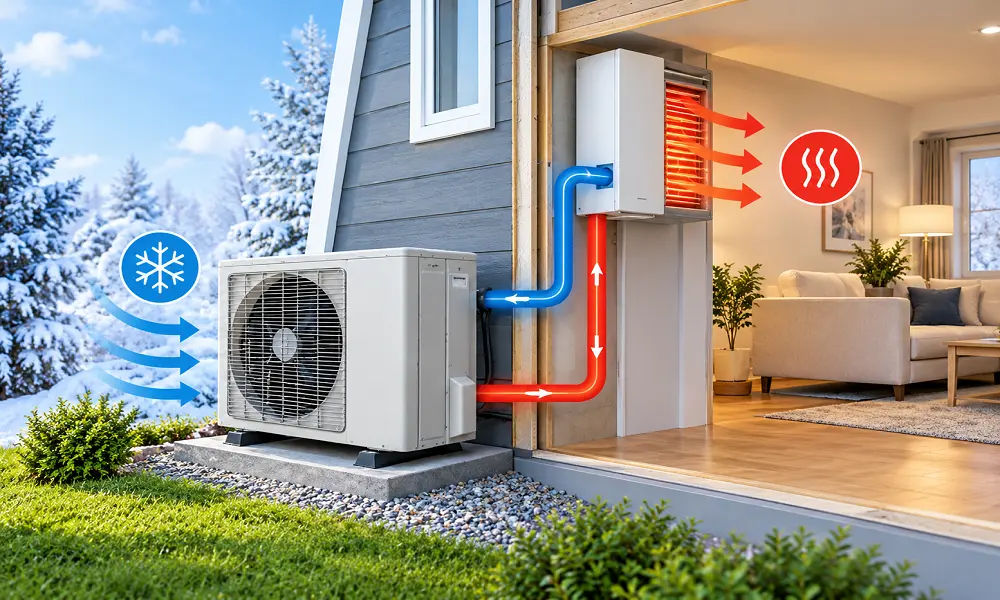
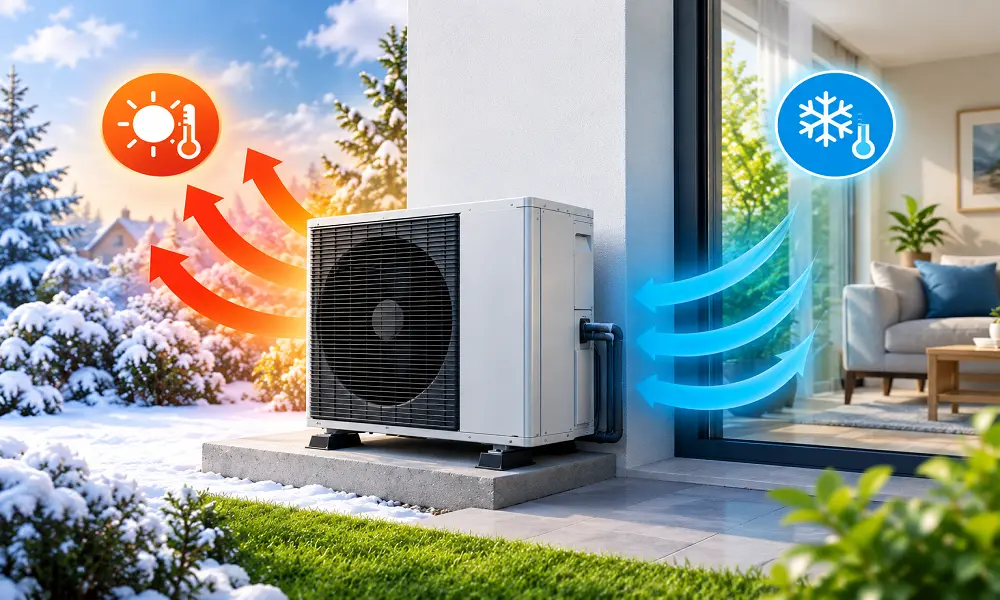
An air source heat pump is an energy-efficient heating system that extracts heat from the outside air and transfers it into your home to provide heating and hot water.
Unlike traditional gas boilers that generate heat by burning fuel, heat pumps transfer existing heat energy using refrigerant technology and electricity. Even cold outdoor air contains thermal energy that can be captured and converted into usable heat.
This process allows heat pumps to achieve significantly higher efficiency levels compared to conventional heating systems.
Many modern systems can deliver more than 300% efficiency, meaning they can produce 3 to 5 units of heat for every 1 unit of electricity consumed.
How Do Air Source Heat Pumps Work in Winter?
One of the biggest misconceptions about air source heat pumps is that they stop working in cold weather. In reality, modern systems are built specifically for year-round operation, including freezing winter conditions.
The heating process works as follows:
- The outdoor unit absorbs heat from the outside air.
- Refrigerant inside the system captures the heat energy.
- The compressor increases the temperature of the refrigerant.
- The heated energy is transferred into your home’s heating system.
- The cycle repeats continuously to maintain indoor comfort.
Advanced systems automatically adjust performance depending on outdoor temperatures, helping maintain reliable heating throughout winter.
Do Heat Pumps Work in Freezing Temperatures?
Yes, absolutely.
Modern air source heat pumps are designed for cold-climate performance and can continue operating efficiently in temperatures as low as:
- -15°C
- -20°C
- -25°C
- Even -30°C in some systems
This makes them highly suitable for UK winters, where temperatures are generally much milder than many European countries already using heat pumps successfully.
Countries such as Norway, Sweden, and Finland rely heavily on heat pump technology despite experiencing significantly colder winters than the UK.
Why the UK Climate Is Ideal for Heat Pumps
The UK climate is actually very well suited for air source heat pumps.
Unlike extremely cold regions with prolonged sub-zero temperatures, the UK typically experiences moderate winters with temperatures averaging between 0°C and 7°C.
Heat pumps perform most efficiently in stable, moderate climates, making the UK an excellent environment for renewable heating systems.
Because winters are relatively mild, air source heat pumps can maintain strong efficiency levels for most of the year.
Advanced Technology That Improves Winter Performance
Modern heat pumps include several advanced technologies that improve efficiency and reliability during cold weather.
DC Inverter Compressors
DC inverter technology allows the compressor to automatically adjust its speed based on heating demand.
Benefits include:
- Reduced energy consumption
- More consistent temperatures
- Improved efficiency
- Lower operating costs
- Reduced wear and tear
Unlike traditional boilers that repeatedly switch on and off, inverter systems run smoothly and efficiently.
Enhanced Vapour Injection (EVI) Technology
Enhanced Vapour Injection technology is specifically designed for cold climates.
It improves heating performance during freezing temperatures by increasing compressor efficiency and heating capacity.
This technology helps maintain strong performance even in extreme winter conditions.
Intelligent Defrost Systems
Frost can naturally build up on outdoor units during winter.
Modern heat pumps use intelligent defrost systems that automatically detect frost accumulation and activate defrost mode only when necessary.
This helps:
- Reduce unnecessary energy use
- Maintain heating efficiency
- Improve system reliability
- Ensure uninterrupted operation
Smart Heating Controls
Many modern systems include smart WiFi-enabled controls that allow homeowners to:
- Adjust temperatures remotely
- Create heating schedules
- Monitor energy usage
- Improve energy efficiency
Smart controls help optimise comfort while reducing running costs.
Are Air Source Heat Pumps Energy Efficient in Winter?
Yes, air source heat pumps remain highly energy efficient during winter.
Although efficiency levels naturally decrease slightly in colder temperatures, they still outperform many traditional electric heating systems and can compete strongly with gas boilers.
Heat pump efficiency is measured using COP (Coefficient of Performance).
Examples include:
- COP 3 = 300% efficiency
- COP 4 = 400% efficiency
- COP 5 = 500% efficiency
This means heat pumps can generate multiple units of heat for every unit of electricity consumed.
Even during winter, modern systems continue operating at impressive efficiency levels.
Can Heat Pumps Reduce Heating Bills?
Air source heat pumps can help reduce heating costs, particularly when combined with:
- Proper home insulation
- Smart heating controls
- Energy-efficient radiators
- Suitable energy tariffs
- Correct system sizing
Potential financial benefits include:
- Lower monthly heating bills
- Reduced maintenance costs
- Improved property energy ratings
- Greater long-term energy savings
As UK energy prices continue to rise, renewable heating systems provide better protection against future fuel cost increases.
Government Grants for Heat Pumps
The UK government currently supports renewable heating installations through the Boiler Upgrade Scheme.
Eligible homeowners may qualify for grants of up to £7,500 towards the installation of an air source heat pump.
This significantly reduces upfront installation costs and encourages more households to transition to renewable heating solutions.
Are Heat Pumps Better Than Gas Boilers?
Air source heat pumps offer several advantages over traditional gas boilers.
Lower Carbon Emissions
Heat pumps use renewable energy from the outside air, helping reduce household carbon emissions.
Greater Energy Efficiency
Modern heat pumps can achieve efficiencies well above traditional heating systems.
Safer Heating Solution
Because heat pumps do not burn fuel, there is no risk of carbon monoxide leaks or gas combustion hazards.
Lower Maintenance Requirements
Heat pumps generally require less maintenance than traditional boiler systems.
Future-Proof Heating
As the UK moves toward net-zero carbon targets, renewable heating technologies are becoming increasingly important.
Are Heat Pumps Suitable for Older Homes?
Yes, many older UK homes can successfully install air source heat pumps.
However, improving insulation and heating efficiency can help maximise performance.
Recommended upgrades may include:
- Better loft insulation
- Double glazing
- Larger radiators
- Underfloor heating
- Professional heat loss assessments
A professional installer can determine the most suitable setup for your property.
Common Myths About Heat Pumps in Winter
“Heat Pumps Don’t Work in Cold Weather”
This is false. Modern systems are specifically engineered for low-temperature operation.
“Heat Pumps Only Work in New Homes”
Heat pumps can also work effectively in existing and older properties.
“Heat Pumps Are Noisy”
Modern systems operate quietly, with some units producing as little as 42 dBA.
“Heat Pumps Are Too Expensive”
While installation costs can be higher initially, government grants and long-term savings help offset the investment.
How Long Do Air Source Heat Pumps Last?
A quality air source heat pump can typically last:
- 15 to 20 years
- Sometimes longer with regular servicing and maintenance
Routine maintenance helps ensure long-term efficiency and reliable operation.
Why More UK Homeowners Are Choosing Heat Pumps
Demand for renewable heating systems is growing rapidly across the UK.
Key reasons include:
- Rising energy prices
- Government incentives
- Improved technology
- Environmental awareness
- Long-term savings
- Net-zero carbon goals
Heat pumps are becoming one of the leading heating solutions for modern UK homes.
Why Choose Wunergy?
At Wunergy, we specialise in supplying and installing advanced air source heat pump systems designed specifically for UK conditions.
Our systems provide:
- High energy efficiency
- Quiet operation
- Smart integrated controls
- Reliable winter performance
- Professional installation
- Ongoing maintenance support
We help homeowners and businesses transition to cleaner, smarter, and more cost-effective heating solutions.
Final Thoughts
So, are air source heat pumps worth it in cold UK winters?
For most homeowners, the answer is definitely yes.
Modern heat pumps are highly efficient, environmentally friendly, and fully capable of delivering reliable heating during freezing temperatures. With rising energy costs, government incentives, and improved technology, air source heat pumps are quickly becoming one of the best long-term heating investments for UK properties.
If you are considering upgrading your heating system, now is the perfect time to explore the benefits of renewable heating.
Contact Wunergy Today
Looking to reduce your heating bills and switch to renewable heating?
Contact Wunergy today for a free survey and personalised quote from our expert heat pump installers.