
With energy prices continuing to rise and the UK moving towards low-carbon heating, more homeowners are asking an important question: Is my home suitable for a heat pump? Heat pumps have become one of the most efficient and environmentally friendly heating solutions available, but not every property has the same heating requirements.
The good news is that most homes in the UK can benefit from a heat pump when the system is correctly designed and professionally installed. At Wunergy, we help homeowners assess their property’s suitability and recommend the most effective renewable heating solution based on their home’s size, insulation, and energy needs.
This guide explains the key factors that determine whether your home is suitable for a heat pump and what you can do to maximise its efficiency.
What Makes a Home Suitable for a Heat Pump?
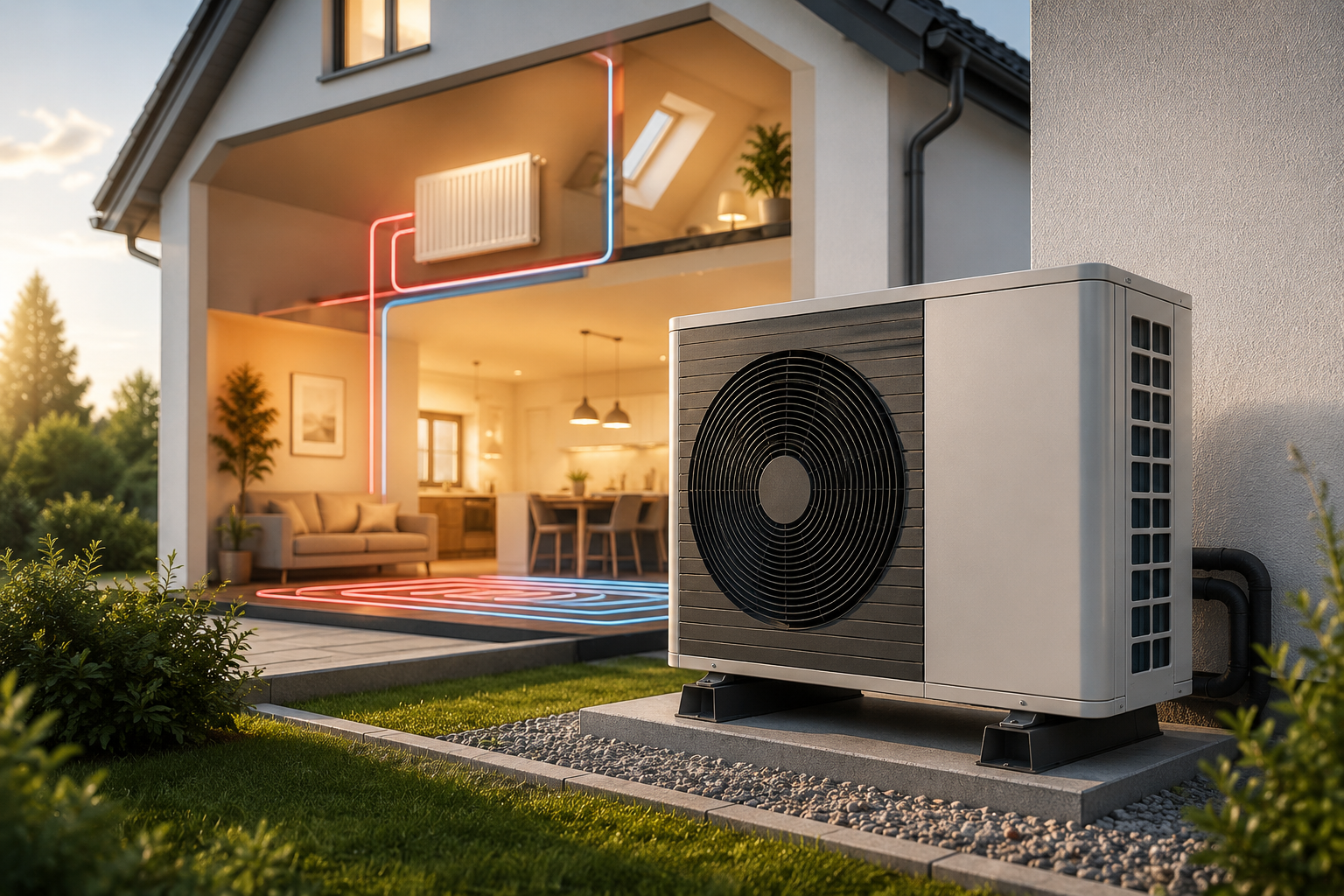
A heat pump extracts renewable heat from the outside air and transfers it into your home to provide heating and hot water. Unlike traditional boilers, heat pumps operate most efficiently when they provide a steady, consistent level of warmth.
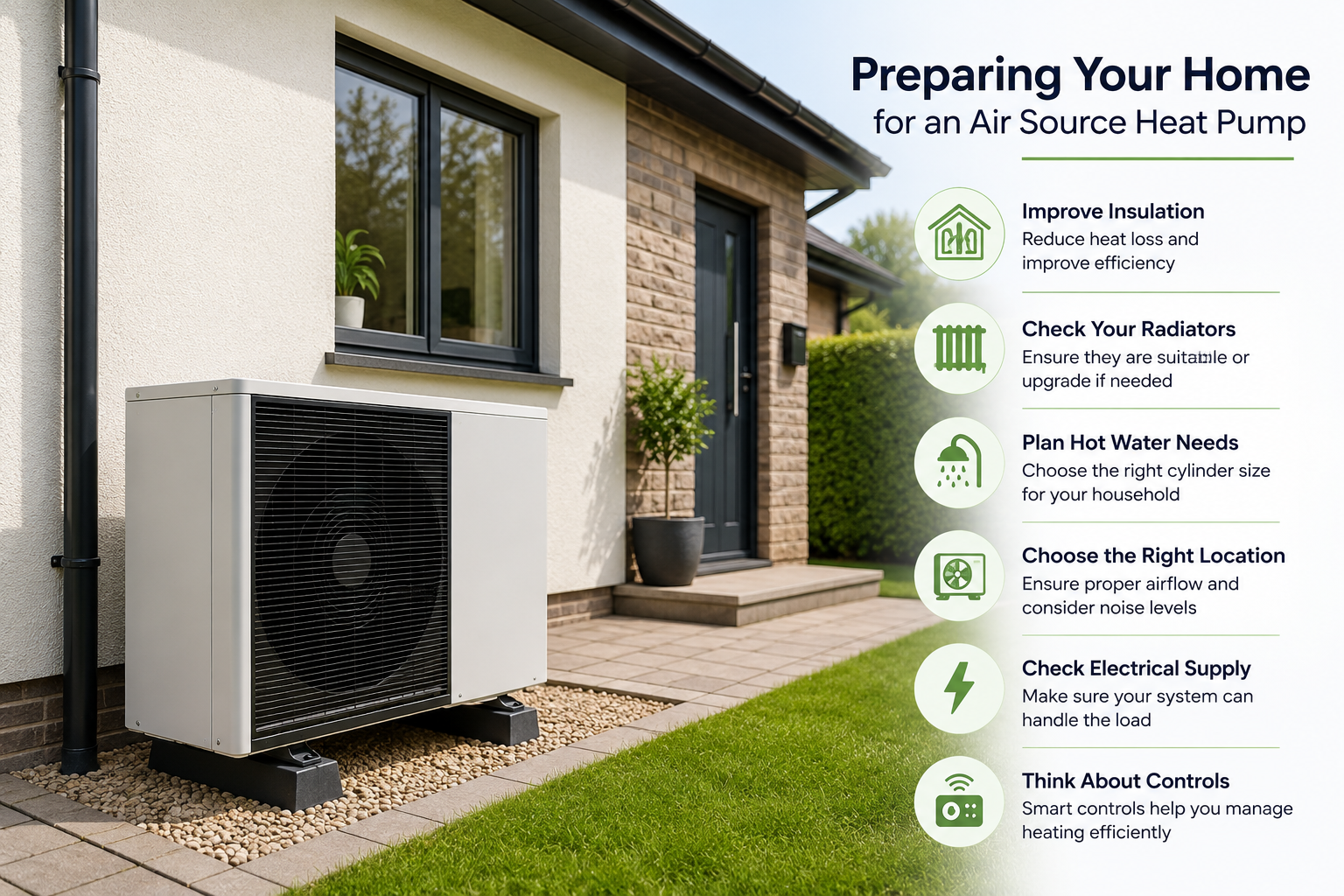
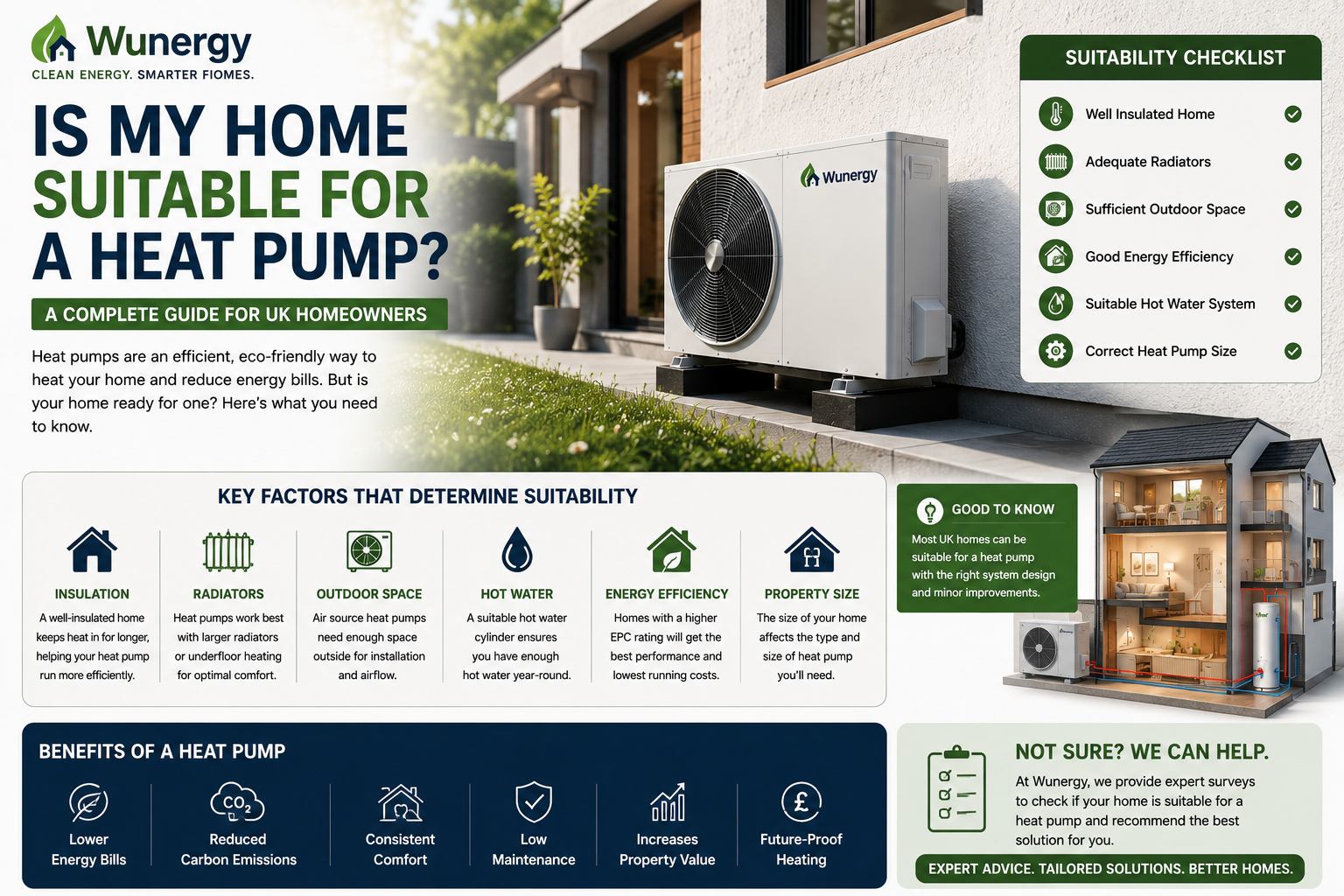
Several factors determine whether your property is a good candidate for a heat pump, including:
- Property size
- Insulation quality
- Existing heating system
- Radiator size
- Hot water demand
- Outdoor space
- Energy efficiency rating
A professional home assessment helps ensure the system is correctly sized for your property.
Does the Age of Your Home Matter?
Many people believe only newly built houses can use heat pumps, but this is a common misconception.
Heat pumps can be installed in:
- Modern new-build homes
- Victorian properties
- Semi-detached houses
- Detached homes
- Terraced houses
- Bungalows
- Apartments (subject to installation requirements)
Older homes may simply require improvements such as better insulation or radiator upgrades to achieve the best results.
At Wunergy, we regularly help homeowners modernise existing properties with energy-efficient heat pump systems.
Why Insulation Is So Important
One of the biggest factors affecting heat pump performance is insulation.
A well-insulated home keeps heat inside for longer, allowing the heat pump to work more efficiently and consume less electricity.
Consider checking:
Loft Insulation
Heat naturally rises, making loft insulation one of the most effective ways to reduce heat loss.
Wall Insulation
Solid wall or cavity wall insulation helps maintain indoor temperatures throughout the year.
Double or Triple Glazing
Modern windows reduce draughts and improve overall energy efficiency.
Floor Insulation
Insulated floors can prevent heat from escaping through the ground floor.
Improving insulation before installing a heat pump can increase efficiency and reduce running costs.
Can I Keep My Existing Radiators?
In many cases, yes.
Modern heat pumps can work with existing radiators, although some homes benefit from installing larger radiators to maximise heat output.
A professional survey will determine whether your current heating system is compatible or if upgrades are recommended.
At Wunergy, every installation begins with a detailed assessment to ensure your existing heating system works effectively with your new heat pump.
Is Outdoor Space Required?
Air source heat pumps require an outdoor unit that draws heat from the surrounding air.
Most homes have enough space for installation, including:
- Front gardens
- Back gardens
- Side access areas
- Driveways
The outdoor unit should be installed in a location with good airflow and minimal obstructions.
Does Property Size Affect Heat Pump Suitability?
Property size influences the size of the heat pump rather than whether your home is suitable.
Small homes require lower-capacity systems, while larger properties need more powerful units to provide consistent heating.
Whether you live in a compact flat or a spacious detached house, there is usually a heat pump solution designed to meet your needs.
What About Hot Water?
Heat pumps provide both heating and domestic hot water.
The correct hot water cylinder size depends on:
- Number of occupants
- Daily water usage
- Number of bathrooms
- Household lifestyle
Choosing the right system ensures reliable hot water throughout the day.
Energy Performance Matters
Homes with a higher Energy Performance Certificate (EPC) rating generally achieve better heat pump performance.
If your property has a lower EPC rating, improving insulation and reducing heat loss can make a significant difference before installation.
Benefits of Installing a Heat Pump
Choosing a heat pump offers many advantages beyond lower heating bills.
Lower Energy Costs
Heat pumps are highly efficient and can reduce household energy consumption compared to older heating systems.
Reduced Carbon Emissions
Using renewable energy helps lower your home’s environmental impact.
Consistent Comfort
Heat pumps provide steady, even heating rather than short bursts of high temperatures.
Future-Proof Heating
As the UK transitions towards low-carbon energy, heat pumps are becoming one of the preferred heating technologies for modern homes.
Increased Property Appeal
Energy-efficient homes are increasingly attractive to buyers looking for lower running costs and sustainable features.
Common Myths About Heat Pumps
“Heat Pumps Only Work in New Homes”
False. Many older UK properties can successfully use heat pumps after appropriate home improvements.
“Heat Pumps Don’t Work During Winter”
Modern air source heat pumps continue to operate efficiently even during cold winter weather.
“Heat Pumps Are Too Expensive”
While the initial investment can be higher than replacing a boiler, government grants and long-term energy savings often make heat pumps a worthwhile investment.
Why Choose Wunergy?
At Wunergy, we believe every homeowner deserves expert guidance when choosing renewable heating.
Our team provides:
- Comprehensive property assessments
- Professional heat loss calculations
- Tailored heat pump recommendations
- Expert installation advice
- Ongoing customer support
Every home is different, which is why we recommend solutions based on your property’s unique characteristics rather than a one-size-fits-all approach.
How to Find Out if Your Home Is Suitable
If you’re unsure whether a heat pump is right for your property, the first step is arranging a professional assessment.
During a survey, experts evaluate:
- Property dimensions
- Insulation quality
- Existing heating system
- Radiator performance
- Hot water requirements
- Outdoor installation space
This information allows the correct heat pump system to be selected for maximum comfort and efficiency.
Final Thoughts
So, is your home suitable for a heat pump? In most cases, the answer is yes. Whether you own a modern house, a period property, or a family home, the right heat pump system can provide reliable heating, lower energy bills, and reduced carbon emissions.
The key is choosing the correct system for your property’s size, insulation, and heating requirements.
At Wunergy, we’re committed to helping UK homeowners make the switch to cleaner, more efficient heating with expert advice and tailored renewable energy solutions. A professional home assessment is the best way to determine the ideal heat pump for your property and start enjoying the long-term benefits of sustainable home heating.