
Heat Pump Radiators: Do You Need to Replace Your Existing Radiators?
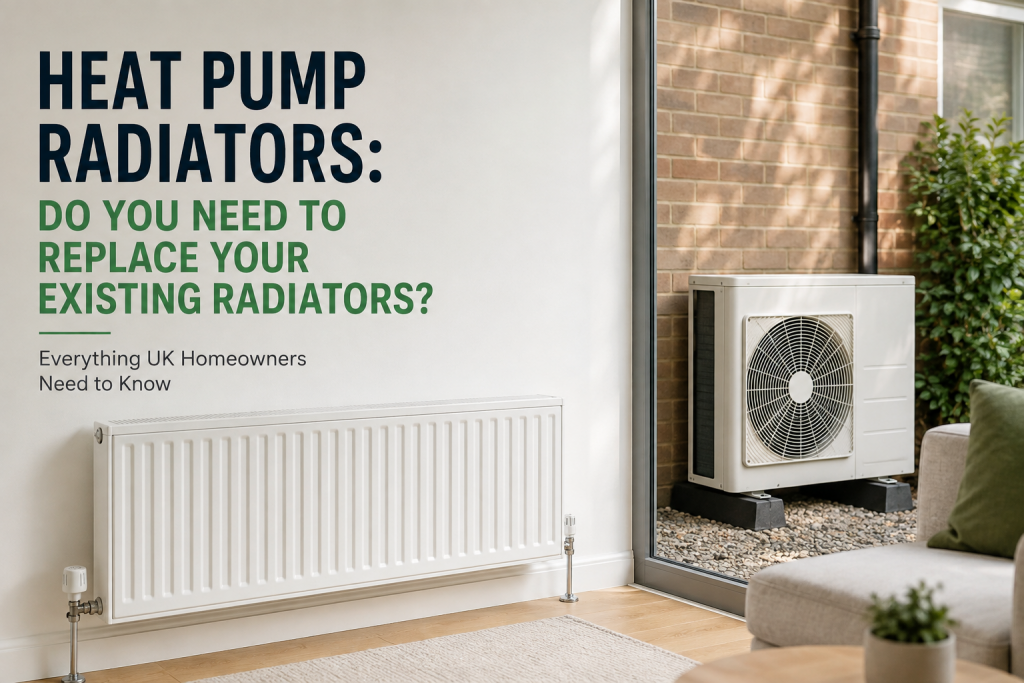
If you are considering replacing your gas boiler with an air source heat pump, one of the first questions you may have is whether your existing radiators will need to be replaced. It is a reasonable concern. Traditional boilers can produce very high water temperatures, while heat pumps generally operate more efficiently at lower flow temperatures. This difference means that the heating system inside your home needs to be properly assessed before installation. The good news is that you do not automatically need to replace every radiator. In many homes, existing radiators can continue to work with a heat pump. However, some properties may benefit from larger or more efficient radiators to deliver comfortable heating while allowing the heat pump to operate efficiently. For homeowners in Birmingham and across the West Midlands considering an air source heat pump, understanding how radiators affect performance can make the transition much easier. Why Are Radiators Important for a Heat Pump? An air source heat pump extracts heat energy from the outdoor air and transfers it into your home’s heating system. Unlike a conventional boiler, it does not generate heat by burning gas or another fossil fuel. Because heat pumps are designed to operate efficiently at lower water temperatures, the radiators need to be capable of transferring enough heat into the rooms. A radiator that works perfectly with a traditional high-temperature boiler may not provide exactly the same heat output when supplied with lower-temperature water. This does not necessarily mean the radiator is unsuitable. It simply means the system needs to be designed around the heat pump. The size, type and position of your radiators, together with your home’s insulation and heat-loss characteristics, all influence how effectively your heating system performs. Can Existing Radiators Work With an Air Source Heat Pump? Yes, existing radiators can often work with an air source heat pump. However, there is no universal answer because every property is different. A professional installer should assess the heating requirements of individual rooms rather than simply assuming that all existing radiators need to be replaced. For example, a recently renovated and well-insulated home may already have radiators that provide sufficient heat at lower flow temperatures. In another property, particularly one with older insulation or smaller radiators, upgrading certain radiators may be beneficial. The objective is not simply to install the biggest radiators possible. The aim is to create a balanced heating system that allows the heat pump to operate efficiently while maintaining comfortable indoor temperatures. Why Heat Pumps Use Lower Temperatures A conventional gas boiler can heat water to a relatively high temperature and send it around the central heating system. Heat pumps work differently. Their efficiency is closely connected to the temperature difference between the heat source and the water being heated. Generally, operating at a lower flow temperature can help a heat pump achieve better efficiency. This is why heat pump installations often involve a detailed assessment of radiators and other heat emitters. Rather than treating the heat pump as a simple boiler replacement, the entire heating system should be considered as one integrated system. What Determines Whether Your Radiators Are Suitable? Several factors can influence whether your existing radiators can be retained. 1. Radiator Size Larger radiators generally have a greater surface area through which heat can be transferred into the room. If a room currently relies on a relatively small radiator designed for high-temperature boiler operation, it may not provide enough heat when supplied with lower-temperature water. A larger radiator can increase heat output without requiring the system to operate at unnecessarily high temperatures. 2. Room Heat Loss Every room loses heat differently. External walls, windows, doors, ceilings, floors and ventilation can all contribute to heat loss. A room with significant heat loss may require a greater radiator output than a well-insulated internal room. This is why professional heat-loss calculations are important when planning an air source heat pump installation. 3. Home Insulation Insulation can have a major influence on heating requirements. If your property has poor insulation, more heat may escape through the building envelope. Improving insulation can reduce the amount of heat required to maintain a comfortable indoor temperature. In some cases, improving the property’s thermal performance can be just as important as changing the heating equipment itself. 4. Existing Heating Design The current design of your central heating system also matters. The number of radiators, their locations, pipework, controls and hot water arrangements can all influence the final design. A heat pump installer should look at the complete system rather than evaluating radiators in isolation. Do All Radiators Need to Be Replaced? No. One of the biggest misconceptions about heat pump installation is that every radiator must automatically be replaced. That is not necessarily the case. During a professional survey, each room can be assessed to determine its heating requirement. Some radiators may already have enough capacity, while others may need to be upgraded. This approach can prevent unnecessary work and help create a more cost-effective installation. For example, a home may only require larger radiators in rooms with greater heat loss, while existing radiators in other rooms can remain in place. What Type of Radiators Work Well With Heat Pumps? There is no single radiator type that is suitable for every property. The important consideration is the radiator’s ability to provide the required heat output at the operating temperature of the heating system. Depending on the property, suitable options may include larger panel radiators, double-panel radiators, double-convector designs or other high-output heating emitters. The correct choice depends on room size, insulation, heat-loss calculations, available wall space and the design temperature of the system. A professional installer should recommend radiator upgrades based on actual heating requirements rather than using a one-size-fits-all approach. What About Underfloor Heating? Underfloor heating can work particularly well with heat pumps because it provides a large surface area for transferring heat into a room. Because the heat is distributed across a large floor area, underfloor systems can operate effectively at