
How to Prepare Your Home for an Air Source Heat Pump Installation
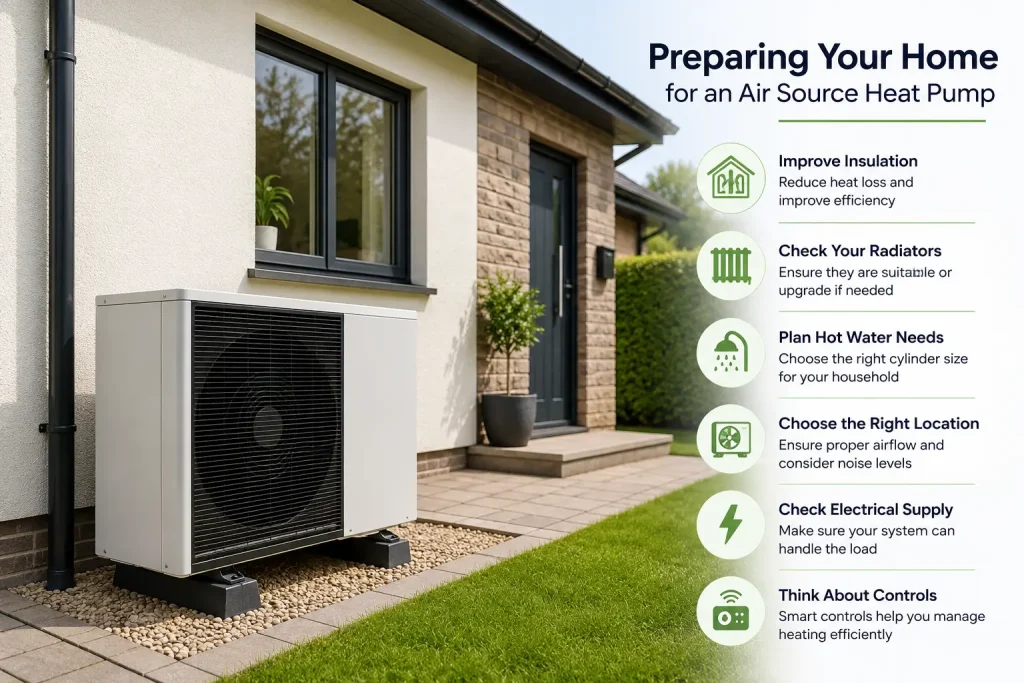
How to Prepare Your Home for an Air Source Heat Pump Installation Switching from a traditional heating system to an air source heat pump is a major home improvement, but good preparation can make the process much easier. Unlike a conventional boiler, a heat pump works most efficiently when your property is well insulated, properly designed and equipped with a heating system that can operate effectively at lower water temperatures. For homeowners considering an air source heat pump installation in the UK, understanding what needs to be prepared beforehand can help avoid unexpected costs and ensure the new system performs as efficiently as possible. Wunergy provides tailored air source heat pump installations and assesses properties before recommending an appropriate system. 1. Check Your Home’s Insulation One of the first things to consider is insulation. Heat pumps generally operate at lower flow temperatures than traditional gas boilers. This means your home needs to retain heat effectively rather than losing it quickly through the roof, walls, windows or floors. Before installation, check: Improving insulation can make your home more comfortable while helping the heat pump work more efficiently. It is not always necessary to carry out every possible insulation improvement. A professional assessment can help identify which upgrades are actually worthwhile for your property. 2. Assess Your Existing Radiators Another important part of preparing for a heat pump is checking your radiators. A gas boiler can produce very high water temperatures, allowing relatively small radiators to heat a room quickly. Heat pumps normally work at lower temperatures, so some existing radiators may not provide enough heat. During an assessment, the heating requirements of individual rooms can be considered. You may need: However, replacing every radiator is not automatically necessary. The right approach depends on your property’s heat-loss calculations and the condition and size of the existing heating system. 3. Consider Your Hot Water Requirements Preparing for an air source heat pump is not only about space heating. Most heat pump systems also provide domestic hot water, meaning your existing hot water cylinder may need to be replaced or upgraded. A suitable cylinder provides enough stored hot water for your household while working effectively with the heat pump. Think about your household’s typical usage: Providing this information during the initial survey helps the installer recommend an appropriately sized system. 4. Find a Suitable Outdoor Location An air source heat pump requires an outdoor unit because it extracts heat from the surrounding air. The location matters. The unit needs adequate airflow and should be positioned somewhere practical while considering noise, access and appearance. Potential locations may include: The outdoor unit should not simply be placed wherever there is spare space. The installer needs to assess the location carefully to ensure the system can operate properly. Wunergy’s systems are designed for efficient and relatively quiet operation, with some units specified at noise levels from around 42 dBA. 5. Check Your Electrical Supply Heat pumps use electricity to operate their compressor, fans, controls and other components. Before installation, your property’s electrical supply should therefore be assessed. An installer can determine whether the existing electrical infrastructure is appropriate for the proposed system and identify any work that may be required. This is particularly important when replacing an older heating system and adding new electrical equipment to the property. 6. Think About Where the Indoor Equipment Will Go The outdoor heat pump is only one part of the installation. Depending on the system and property, you may also require equipment such as: You should therefore consider where these components can be installed without unnecessarily reducing useful living or storage space. A professional survey should take available space into account when designing the system. 7. Review Your Current Heating Controls Modern heating controls can make a significant difference to how easily you manage your home’s heating. Before installation, consider how you currently control your heating. Do you use: Heat pumps often work best when operated differently from traditional boilers. Instead of rapidly heating a cold house, they are generally designed to provide consistent, efficient heating. Smart and connected controls can also make it easier to manage your system. Wunergy offers systems with Wi-Fi-connected control options on applicable installations. 8. Think About Your Daily Heating Habits Installing a heat pump can involve changing the way you use your heating. Many homeowners are accustomed to switching a boiler on for short periods and turning it off when they leave the house. Heat pumps are generally better suited to maintaining a stable indoor temperature over longer periods. Before making the switch, consider: Understanding your lifestyle allows the heating system and controls to be configured around your household. 9. Make Sure the Property Is Suitable Not every home requires the same heat pump system. Property size, insulation, construction, glazing, room layouts, existing radiators and hot water requirements can all affect the design. A small terrace house may require a very different solution from a large detached property. Wunergy currently offers systems across different capacities, with its website describing installations ranging from smaller domestic systems through to larger systems for bigger properties. This is why choosing a system based purely on the size of the boiler being replaced is not recommended. The heat pump should be correctly sized for the actual heating requirements of the property. 10. Choose an Experienced, Accredited Installer The installation itself is one of the most important parts of the process. A high-quality heat pump can still perform poorly if it is incorrectly sized, poorly installed or improperly commissioned. When comparing installers, look for: Wunergy states that it is MCS certified and handles the Boiler Upgrade Scheme application process for eligible customers. What Happens During a Heat Pump Survey? A professional survey should look at much more than simply where the outdoor unit can be positioned. The assessment may consider: The information gathered during the survey helps determine the appropriate system and installation requirements. Can You Keep Your Existing Radiators? In some homes, yes. Whether your existing radiators can