
Heat Pump Types: A Guide to the Different Types of Heat Pumps
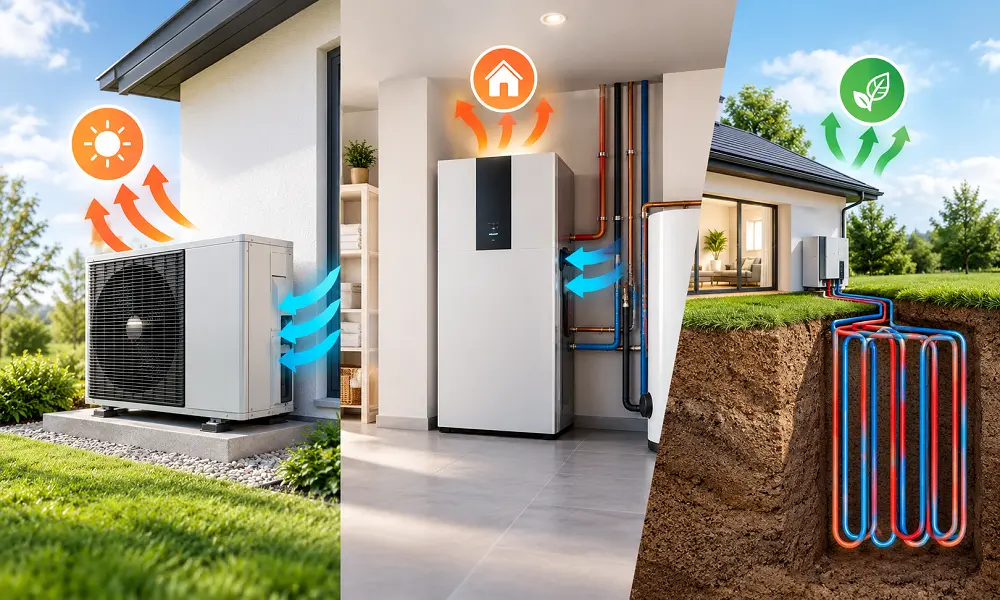
Considering a heat pump but don’t know which kind would best serve your house? More British households are nowadays turning to heat pump technology instead of conventional heating systems. However, picking the right one might not be easy. In fact, there are a few heat pump types, and which one you go for, depends on the property size, available ground area, and the heating needs. Understanding the main types of heat pumps from air source to ground source will surely assist you in making an easier decision. What Is a Heat Pump? The working of a heat pump is quite different from typical heating systems: instead of relying on combustion processes to create heat, it simply redirects it from heat sources like air, earth, or water into your home. In the cold weather the heat pump will extract warmth from these heat sources and use it to heat your property. The main types of heat pumps include: Systems differ in their installation requirements so your choice has to be based on the characteristics of your property, rather than the popularity of the system type only. 1. Air Source Heat Pumps Air source heat pumps extract heat from the outside air and transfer it into your home. They are one of the most commonly considered types of heat pumps in the UK, partly because they generally require less outdoor space than ground source systems. There are two main varieties: Air-to-water: Transfers heat into water for radiators, underfloor heating and hot water. Air-to-air: Transfers heat directly into indoor air through internal units and can often provide cooling as well. Air source systems can be suitable for a wide range of properties, although the system needs to be properly designed according to the home’s heat demand. 2. Ground Source Heat Pumps Ground source heat pumps take heat from the ground through a network of buried pipes. The ground maintains relatively stable temperatures compared with outdoor air, but installing the system can require more space and groundwork. Pipework may be installed horizontally across suitable land or through boreholes where appropriate. Ground source systems can be considered for properties where: You should evaluate the available space and installation restrictions first before making any decision. 3. Water Source Heat Pumps Water source heat pumps are devices that take heat from the water source like a lake or river and heat up your house or building by transferring it there. This type of system is more property-specific because access to a suitable water source is necessary. In addition to the above factors, installation can also require various aspects such as technical, environmental, and regulatory. In addition to the above factors, installation can also require various aspects such as technical, environmental, and regulatory. Therefore, water source systems are typically not seen as viable options for all homeowners but if the proper conditions are met, these systems offer significant benefits. 4. Air-to-Air Heat Pumps Air-to-air heat pumps pull heat from the air outside. That warmth gets moved straight into the indoor space. Typically,they are different from air-to-water systems, because in this case the water is not usually heated for radiators or domestic hot-water cylinders. Instead, indoor units provide warm air throughout the house. Another great benefit is that many of these heating systems can cool too. Therefore, they are very fitting for the cases where a property requires both heating and cooling. Air Source vs Ground Source Heat Pump When comparing air source vs ground source heat pump systems, the main difference is their heat source and installation requirements. Feature Air Source Ground Source Heat source Outdoor air Ground Space required Usually less More land may be needed Installation Generally simpler More extensive groundwork Temperature source Varies with weather More stable Suitable for Many property types Properties with suitable land Installation disruption Usually lower Can be higher Neither option is automatically right for every home. Property size, insulation, heating demand and available outdoor space should all be considered. How Do You Choose Between Different Heat Pump Types? Comparing equipment prices is only a small part of choosing between heat pump types. There is a lot more to weigh up. Start with your property. Then think about how you currently heat it. Important factors include: A professional assessment can help determine which system is technically suitable before you commit to an installation. Why Choose Wunergy? Choosing a heat pump is only part of the process. Correct system design and professional installation are equally important. Wunergy helps homeowners explore heating solutions based on the requirements of their individual properties. Rather than assuming one system works for everyone, the focus is on understanding the home and recommending an appropriate approach. Why consider Wunergy? If you’re unsure whether an air source, ground source or another system is suitable, discussing your property with an experienced installer is a sensible starting point. Ready to Explore Your Heat Pump Options? Not sure which heat pump could work for your home? Contact Wunergy to discuss your property and heating requirements. Get professional advice on the available options and take the first step towards a modern, efficient heating solution. FAQs 1. What are the main types of heat pumps? Air source, ground source, water source, and air-to-air are the main varieties of heat pumps. Basically, their difference lies in the heat source and the way that heat is brought into the building. 2. What is the difference between air source and ground source heat pumps? Air source heat pumps collect heat from the outside air, whereas ground source heat pumps extract heat from the ground using a network of buried pipes. Typically, ground source heat pumps occupy and involve more groundspace. 3. Which heat pump types are suitable for UK homes? Heat pumps from air source and ground source are the most typical options to consider when heating a house in the UK. However, these factors should be taken into account before making a decision: 4. Do heat pumps work in cold weather? Indeed,one of