
How Do Heat Pumps Work?
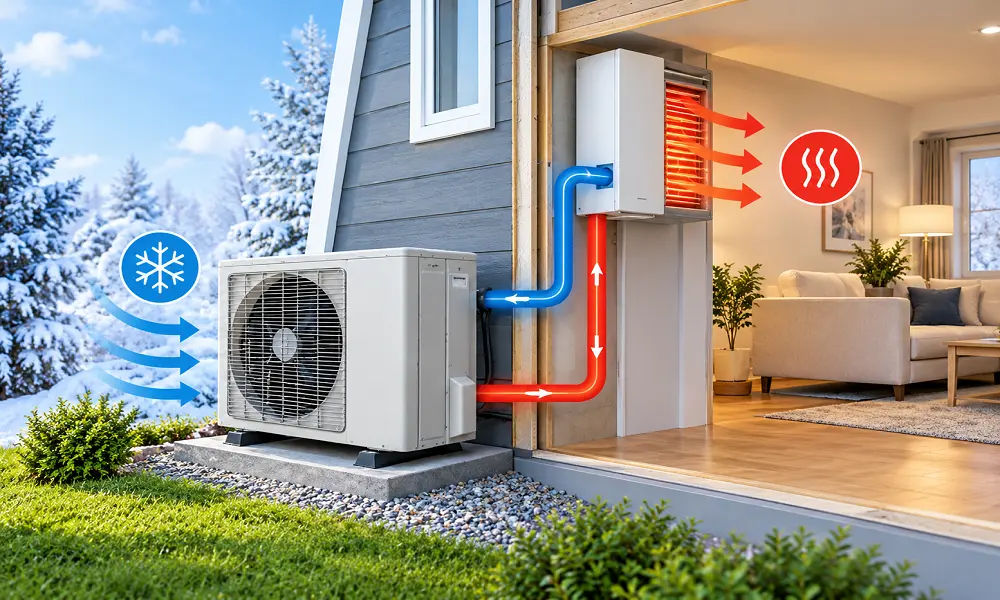
How could a heating pump heat your home without using fuel, and can it still run in winter? If you have researched different heating alternatives at home, you probably have heard about heating pumps already. More and more homeowners are considering heating pumps as a viable heating solution nowadays. Before selecting one, it is wise to learn how do heat pumps work and how they are different from traditional boilers. In principle, heat pumps are extremely simple devices. They do not generate heat; instead, they shift heat from one location to another. What Is a Heat Pump? A heat pump is known as a heating system whose extensive purpose is transferring heat from some external source to your living premises. Generally, heat may be derived from the following sources: The heat pump operates by consuming electrical energy to transfer heat instead of burning fuels. As it comes to application, heat pumps serve for space heating, hot water preparation as well as cooling operations. How Do Heat Pumps Work Step by Step? So, how do heat pumps work in practice? Despite the fact that the technology sounds difficult, the main working process involves a few major elements. 1. The System Collects Heat Heat is taken by the heat pump from the surroundings. For example, the air-source heat pump gets heat from the air outside. Even in frosty weather, there is still heat in the air which can be taken by the pump. 2. Refrigerant Absorbs the Heat Heat is extracted and forwarded to the refrigerant within the heat pump. The refrigerant helps take in the heat and release the heat at the same time. 3. The Compressor Raises the Temperature The refrigerant gets to the compressor, which elevates the pressure of the material and increases its temperature. It produces a hotter heat source that is transferred to the premises. 4. Heat Is Transferred Into Your Home The heated refrigerant will move to the heat exchanger. Depending on the kind of heat pump, the heat could be transmitted into water or directly to the indoor air. 5. The Cycle Starts Again Once the heat is released, the refrigerant will cool down and go back into the system. While the heat pump is working, it will keep going round in circle like a wheel turning in the air. How Does a Heat Pump Differ From a Boiler? A traditional boiler generally produces heat by burning a fuel such as gas. A heat pump works differently. It uses electricity to transfer existing heat from the environment into your home. Feature Heat Pump Traditional Boiler Main process Transfers heat Generates heat Energy source Electricity + environmental heat Usually gas or another fuel Outdoor unit Usually required Usually not Heating method Heat transfer Fuel combustion Cooling capability Possible with some systems Generally not This difference is one of the main reasons heat pumps are being considered as an alternative to conventional heating systems. How Do Air Source Heat Pumps Work? The air source heat pump is one of the heat pumps most popular for household use. It consists of an outdoor unit which gathers heat from the surrounding air and sends it inside through the refrigerant cycle. There are two types of air source heat pumps. Air-to-Water An air-to-water system essentially moves heat from the air into water, which in turn is used by radiators, underfloor heating systems, or even a hot water cylinder. Air-to-Air Air-to-Air air conditioning systems can transfer heat directly to the indoor air with the help of their indoor units, while being capable of cooling during the warmer seasons as well. The selection of the perfect air conditioning system will depend on factors such as heating system, structure and needs of the property. How Do Ground Source Heat Pumps Work? Ground-source heat pumps work much like air-source ones. Only the heat source changes: instead of warm air from outside, they draw heat from the ground. A series of underground pipes pass fluid through the ground, absorbing the heat and taking it to the heat pump. It then raises the temperature of that heat and delivers it to the residence. Ground temperatures tend to be more consistent than outside air temperatures, however, the installation of pipes may need suitable land or specialized work. Why Choose Wunergy? It may be useful for you to know how heat pumps work, but selecting the right heat pump system is another vital step. Wunergy assists people in finding modern heating solutions according to their requirements. Instead of treating every house same way, the approach is to determine the best system appropriate for each property by considering things like heating demand, characteristics of the house, and previous heating setup. Why consider Wunergy? A properly fitted heat pump system leaves a huge impact on the overall operation and comfort in your home. Is a Heat Pump Right for Your Home? Now that you have an understanding of how heat pumps work, the next question to consider is whether a heat pump would be appropriate for your property. There is no one size fits for all. Factors such as your home’s insulation, size and heating needs, as well as the space you have available outdoors and your current heating system; all influence your chances of finding success with a heat pump. A professional evaluation can be of great help if you want to know what type of heat pump is best for your home and whether any changes would be required before installation. Heat pump experts can also let you know if such changes would really be necessary. Ready to Explore Heat Pump Heating? Interested in determining if a heat pump is a viable option for your home? Get in touch with Wunergy for an expert evaluation that considers your property, heating needs and available solutions. FAQs 1. How do heat pumps work? A heat pump pulls heat from an outside source, like the soil or the outside air, and moves it into the home. It relies on