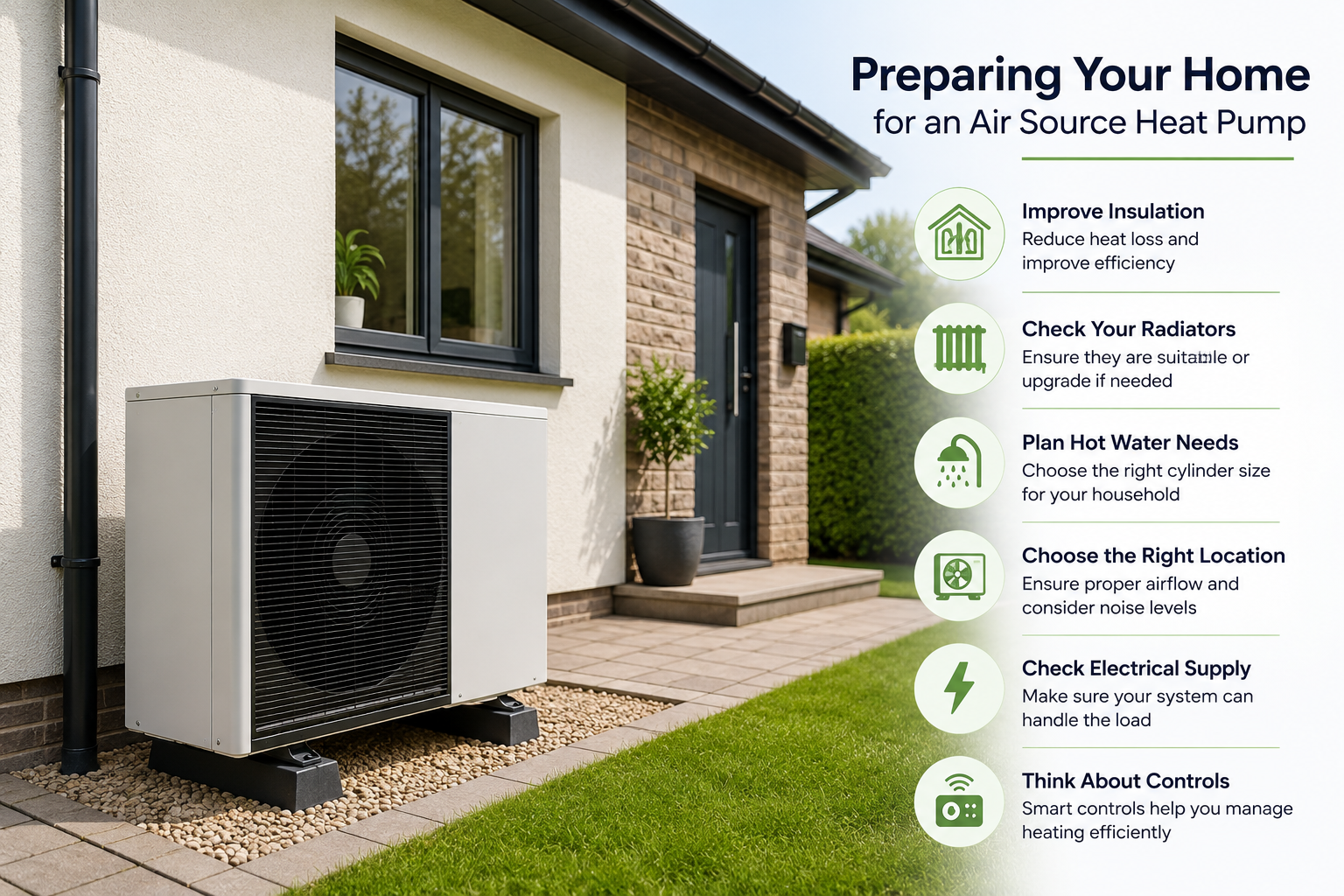

As energy prices continue to rise across the UK, homeowners are increasingly searching for efficient and cost-effective ways to heat their properties. Traditional gas boilers have been the primary heating solution for decades, but renewable technologies such as air source heat pumps are rapidly gaining popularity.
With the UK government promoting cleaner energy solutions and offering financial incentives through the Boiler Upgrade Scheme, many homeowners are now asking the same question: Should I choose an air source heat pump or stick with a gas boiler?
In this guide, we’ll compare both heating systems in terms of efficiency, costs, environmental impact, maintenance requirements, and long-term value to help you make an informed decision.
What Is an Air Source Heat Pump?
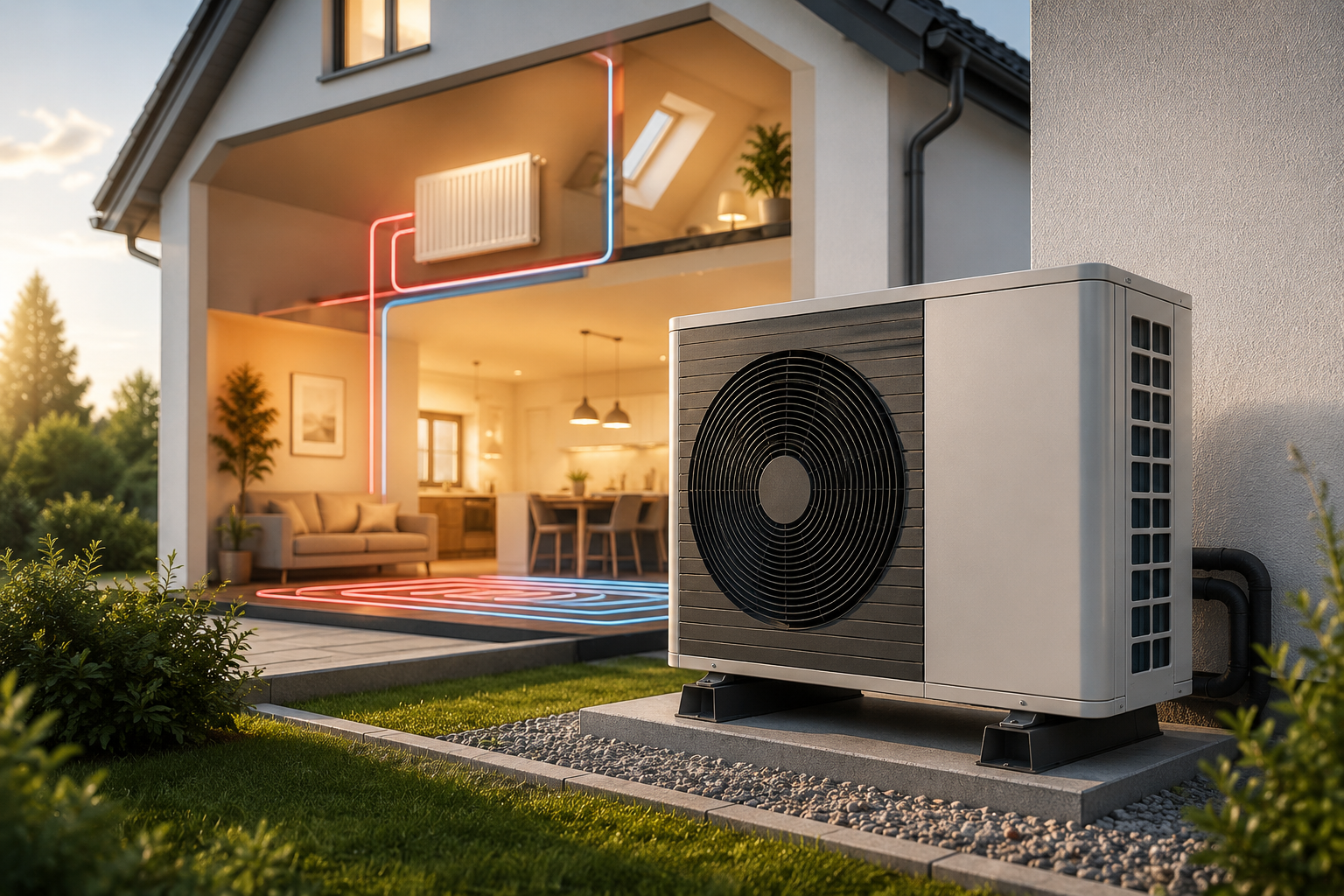
An air source heat pump (ASHP) is a renewable heating system that extracts heat from the outside air and transfers it into your home. Even when temperatures are low, heat energy exists in the air and can be captured and converted into usable heat.
Unlike traditional boilers that generate heat through combustion, heat pumps simply move heat from one location to another, making them significantly more energy efficient.
Air source heat pumps can provide home heating, hot water, consistent indoor temperatures, and lower carbon emissions. Modern heat pumps can operate efficiently in temperatures as low as -25°C, making them suitable for UK weather conditions throughout the year.
How Does a Gas Boiler Work?
Gas boilers generate heat by burning natural gas. The heat produced warms water, which is then distributed throughout the property via radiators and hot water systems.
Although gas boilers have been reliable heating solutions for many years, they depend on fossil fuels and contribute directly to carbon emissions.
Many UK households continue to rely on gas heating, but increasing fuel prices and environmental regulations are encouraging homeowners to explore alternative technologies.
Comparing Energy Efficiency
Air Source Heat Pumps
One of the biggest advantages of air source heat pumps is their exceptional efficiency.
A modern air source heat pump can achieve a Coefficient of Performance (COP) of up to 5.0 or higher. This means that for every 1 kWh of electricity used, up to 5 kWh of heat can be produced. This equates to efficiency levels between 300% and 500%.
Benefits include lower energy consumption, reduced utility bills, improved sustainability, and greater long-term savings.
Gas Boilers
Modern condensing gas boilers generally achieve efficiency levels of around 90%.
While this is impressive compared to older boiler models, it means that some energy is inevitably lost during combustion. As energy costs continue to rise, these efficiency differences can have a significant impact on annual heating expenses.
Installation Costs
Air Source Heat Pump Installation
The upfront cost of installing an air source heat pump is generally higher than replacing a gas boiler.
Installation costs may vary depending on property size, existing heating systems, insulation levels, and any required upgrades.
However, homeowners may be eligible for government support through the Boiler Upgrade Scheme, which currently offers grants of up to £7,500 towards installation costs.
Gas Boiler Installation
Gas boilers typically have lower installation costs and are often easier to replace in homes that already have gas infrastructure.
However, lower upfront costs do not necessarily translate into lower long-term expenses.
Running Costs and Savings
When evaluating heating systems, long-term operating costs are often more important than initial installation expenses.
Air Source Heat Pumps
Because of their high efficiency, air source heat pumps can significantly reduce energy consumption.
Potential benefits include lower heating bills, reduced maintenance costs, longer system lifespan, and protection from rising gas prices.
Many homeowners experience noticeable reductions in annual energy expenses after switching to a heat pump.
Gas Boilers
Gas boilers may initially seem more affordable, but long-term costs can increase due to fluctuating gas prices, annual servicing requirements, component replacements, and future environmental regulations.
Over a 15 to 20-year period, heat pumps often provide better overall value.
Environmental Benefits
Sustainability is becoming a major factor when choosing a heating system.
Air Source Heat Pumps
Heat pumps use renewable energy from the surrounding air, resulting in much lower carbon emissions.
Environmental benefits include reduced dependence on fossil fuels, lower greenhouse gas emissions, improved energy efficiency, and support for the UK’s net-zero targets.
Switching from a gas boiler to a heat pump can substantially reduce a household’s environmental impact.
Gas Boilers
Because gas boilers burn fossil fuels directly, they continue to release carbon dioxide into the atmosphere.
As the UK moves toward cleaner energy solutions, traditional gas heating systems are expected to become less attractive from both environmental and regulatory perspectives.
Performance During Winter
A common concern among homeowners is whether heat pumps can perform effectively during cold weather.
Modern air source heat pumps use advanced technologies such as DC inverter compressors, intelligent defrost systems, and Enhanced Vapour Injection technology. These features allow systems to maintain excellent performance even in freezing conditions.
Many modern units can continue operating efficiently at temperatures as low as -25°C to -30°C.
Noise Levels
Today’s heat pumps are designed with advanced sound reduction technologies.
Features often include brushless DC fans, anti-vibration systems, and acoustic insulation. Many units operate at noise levels as low as 42 dBA, making them suitable for residential environments.
This is comparable to a quiet library or a low-volume conversation.
Maintenance Requirements
Heat Pumps
Routine maintenance generally includes cleaning filters, inspecting outdoor units, checking refrigerant levels, and annual servicing.
Heat pumps have fewer combustion-related components, reducing the likelihood of certain mechanical issues.
Gas Boilers
Gas boilers require annual safety inspections, gas safety certification, burner maintenance, and flue inspections.
Regular servicing is essential for both performance and safety.
The Boiler Upgrade Scheme
The UK Government’s Boiler Upgrade Scheme is helping homeowners transition to low-carbon heating technologies.
Eligible property owners can receive grants of up to £7,500 toward the installation of qualifying heat pump systems.
The scheme aims to reduce carbon emissions, improve energy efficiency, encourage renewable heating adoption, and lower household energy consumption.
For many homeowners, this financial support significantly reduces the cost difference between heat pumps and traditional heating systems.
Which Heating System Is Right for You?
An air source heat pump may be ideal if you want lower energy bills, are planning for long-term savings, want to reduce your carbon footprint, wish to future-proof your home, or qualify for government grants.
A gas boiler may still be suitable if you require a lower upfront investment, your property already relies heavily on gas infrastructure, or you are looking for a short-term heating solution.
Final Thoughts
The future of home heating in the UK is moving toward renewable and energy-efficient technologies. While gas boilers remain common, air source heat pumps offer superior efficiency, lower emissions, and significant long-term savings.
With government incentives available through the Boiler Upgrade Scheme and ongoing advances in heat pump technology, there has never been a better time to explore renewable heating solutions.
For homeowners looking to reduce heating costs, improve sustainability, and increase energy efficiency, an air source heat pump represents a smart investment for the future.
Why Choose Wunergy?
Wunergy is a trusted provider of renewable heating solutions across the UK. We specialise in the supply, installation, servicing, and maintenance of high-performance air source heat pumps designed to help homeowners and businesses reduce energy costs while lowering carbon emissions.
Our experienced team guides customers through every stage of the process, from initial consultation and property assessment to installation and ongoing support. We also help eligible customers benefit from available government incentives, including the Boiler Upgrade Scheme.
Whether you’re replacing an old gas boiler or planning a complete heating upgrade, Wunergy delivers reliable, energy-efficient solutions tailored to your property’s needs.