
As UK homeowners face rising energy costs and increasing pressure to reduce carbon emissions, choosing the right heating system has become more important than ever. Traditional gas boilers have been the standard for decades, but air source heat pumps are rapidly becoming the preferred alternative due to their energy efficiency, lower environmental impact, and government support.
If you’re planning to upgrade your home’s heating system, this guide explains the key differences between air source heat pumps and gas boilers, helping you make an informed decision.
Understanding Air Source Heat Pumps
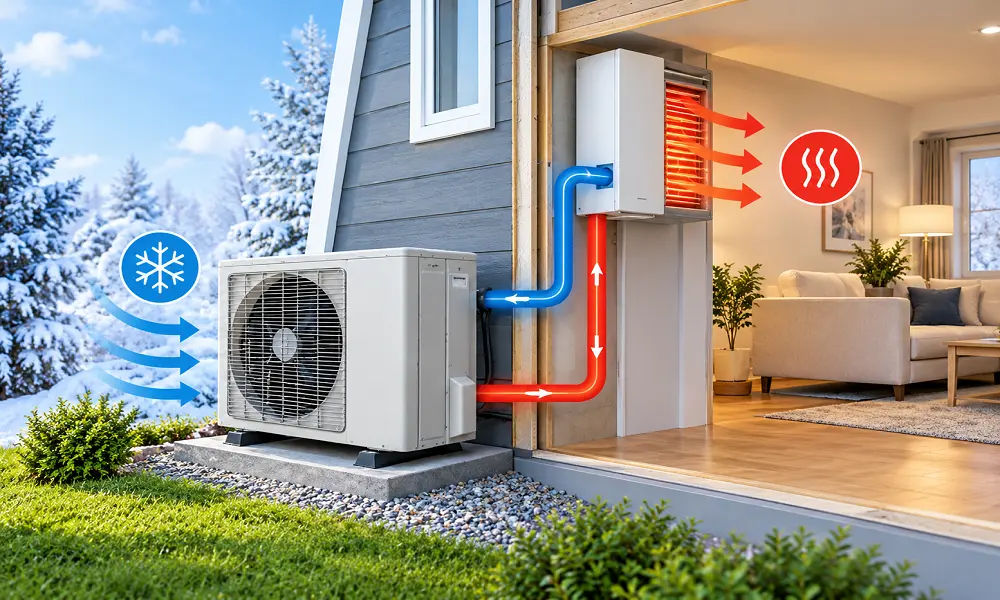
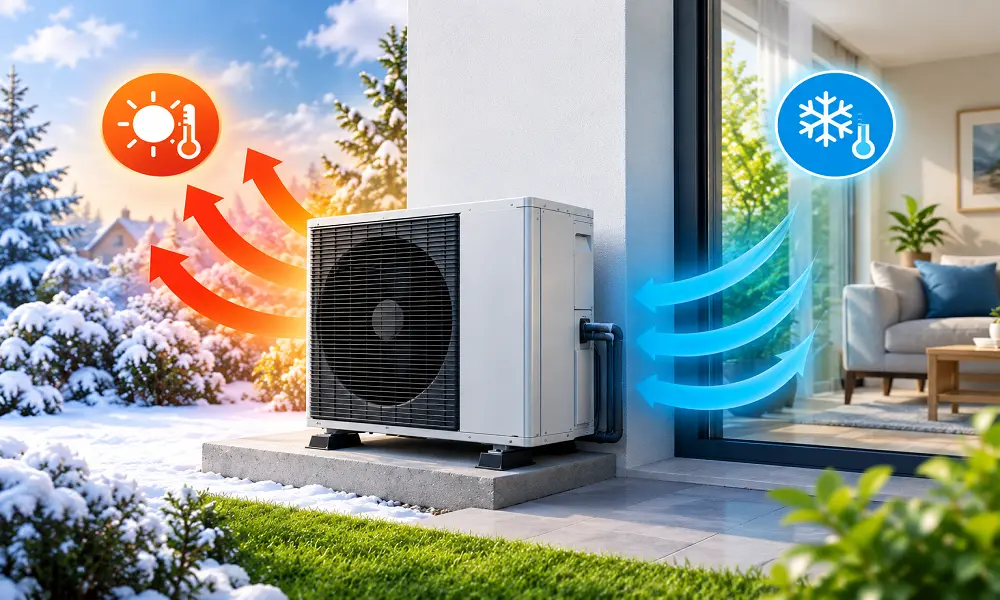
An air source heat pump (ASHP) captures heat from the outside air and transfers it into your home to provide heating and hot water. Unlike gas boilers, which create heat by burning fuel, heat pumps simply move existing heat, making them significantly more energy efficient. Modern systems continue to perform effectively even during cold UK winters.
At Wunergy, every installation is completed by MCS-certified engineers and tailored to suit your property’s heating requirements, ensuring reliable comfort and long-term performance.
How Gas Boilers Work
Gas boilers generate heat by burning natural gas. While they have served homeowners well for many years, they depend on fossil fuels and produce carbon emissions. As energy regulations become stricter and sustainability becomes a priority, many households are considering cleaner alternatives.
Energy Efficiency Comparison
One of the biggest differences between these two systems is efficiency.
Air Source Heat Pumps
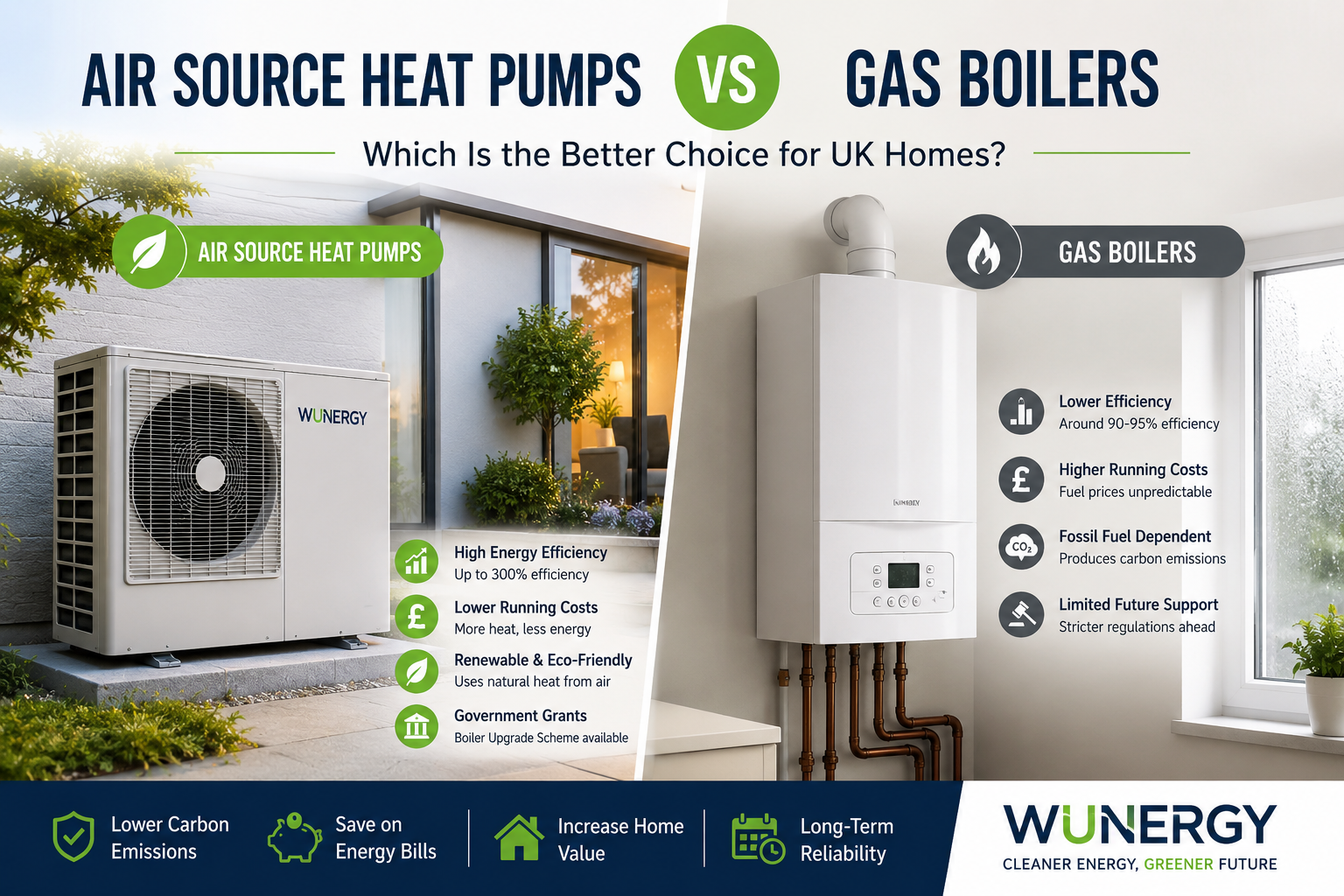
- Can achieve efficiencies of over 300%.
- Produce more heat energy than the electricity they consume.
- Lower overall energy consumption.
- Reduce monthly heating costs over time.
Gas Boilers
- Modern condensing boilers are efficient but generally achieve around 90-95% efficiency.
- Every unit of heat requires burning fuel.
- Fuel prices remain unpredictable.
For homeowners looking to reduce long-term energy expenses, air source heat pumps offer a clear advantage.
Environmental Benefits
Reducing household carbon emissions has become a national priority across the UK.
Air Source Heat Pumps
- Use renewable heat from outdoor air.
- Significantly reduce CO₂ emissions.
- Help homeowners contribute to net-zero goals.
- Work exceptionally well alongside solar panels.
Gas Boilers
- Burn fossil fuels.
- Produce greenhouse gas emissions.
- Face increasing regulatory pressure as the UK transitions toward cleaner heating technologies.
Running Costs
Although installing an air source heat pump typically costs more initially, operating costs are usually much lower because of the system’s high efficiency.
Factors affecting running costs include:
- Property insulation
- Heat pump sizing
- Electricity tariff
- Household heating habits
Over the system’s lifespan, many homeowners recover the higher installation cost through reduced energy bills and available government incentives.
Government Grants
One of the biggest reasons many homeowners are switching is financial support through the UK Boiler Upgrade Scheme.
Eligible homeowners can receive substantial grants toward the installation cost, with Wunergy handling the application process on the customer’s behalf as part of its installation service.
This significantly reduces the upfront investment, making renewable heating more affordable.
Installation Process
Air Source Heat Pump Installation
Installation generally includes:
- Home energy assessment
- Heat loss calculations
- Outdoor heat pump unit installation
- Hot water cylinder connection
- System commissioning
- Performance testing
Professional installers ensure the system is correctly sized to maximise efficiency and comfort.
Maintenance Requirements
Both systems require regular servicing.
Heat Pumps
- Annual servicing recommended.
- Fewer moving combustion parts.
- No gas safety concerns.
- Long operational lifespan, often exceeding 20 years.
Gas Boilers
- Annual gas safety inspection required.
- More combustion-related components.
- Typically shorter lifespan.
Noise Levels
Modern air source heat pumps are much quieter than many homeowners expect.
Today’s systems typically operate at around 42–45 dB, similar to a quiet conversation or household refrigerator, making them suitable for residential properties.
Which Homes Are Suitable?
Air source heat pumps work well in:
- Detached houses
- Semi-detached homes
- Terraced properties
- New-build homes
- Renovated properties
- Rural homes
- Off-grid properties
The key requirement is correct system design rather than property age.
Long-Term Value
Installing an air source heat pump can provide long-term benefits beyond lower energy bills.
These include:
- Reduced carbon footprint
- Increased energy efficiency
- Potential improvement in property value
- Future-ready heating technology
- Lower reliance on fossil fuels
Air Source Heat Pump vs Gas Boiler
| Feature | Air Source Heat Pump | Gas Boiler |
|---|---|---|
| Energy Efficiency | Excellent | Good |
| Carbon Emissions | Very Low | High |
| Renewable Energy | Yes | No |
| Government Grants | Available | Limited |
| Running Costs | Lower | Higher |
| Lifespan | 20+ Years | 10–15 Years |
| Future Compliance | Excellent | Declining |
Why Choose Wunergy?
Wunergy specialises in supplying and installing high-performance air source heat pumps for homes across England. Their experienced MCS-certified engineers provide a complete service, from the initial survey through installation and aftercare, ensuring every customer receives a heating solution designed for maximum efficiency and long-term savings. They also manage the Boiler Upgrade Scheme application process, making it easier for eligible homeowners to benefit from available government funding.
Final Thoughts
While gas boilers have served UK homes for many years, air source heat pumps represent the future of domestic heating. They offer greater energy efficiency, lower carbon emissions, reduced running costs, and access to valuable government incentives.
If you’re planning to replace an ageing boiler or want a cleaner, more efficient heating system, an air source heat pump is a smart long-term investment. With professional installation from Wunergy, you can enjoy reliable comfort, lower energy bills, and a more sustainable home for years to come.