
Heat Pump Pricing Guide for Small and Large Homes

As energy prices continue to rise across the UK, more homeowners are exploring renewable heating solutions that offer long-term savings and improved energy efficiency. Heat pumps have quickly become one of the most popular alternatives to traditional gas boilers. However, one of the most common questions homeowners ask is: How much does a heat pump cost for small and large homes? At Wunergy, we help homeowners understand how property size influences heat pump costs and how choosing the right system can deliver better comfort, lower energy bills, and improved efficiency. Why Home Size Matters When Choosing a Heat Pump Every property has different heating requirements. A small flat requires far less heating energy than a large detached house. The size of your property directly affects: Choosing a system that matches your home’s requirements is essential for achieving maximum performance. Heat Pump Costs for Small Homes Small homes typically include: These properties generally require smaller heat pump units because they have lower heating demands. Typical Installation Costs Smaller systems often require less installation work, making them more affordable. At Wunergy, many homeowners with smaller properties choose compact air source heat pumps that provide efficient heating while reducing monthly energy bills. Heat Pump Costs for Medium-Sized Homes Three-bedroom homes represent a large portion of UK properties. These homes usually require larger heat pumps capable of providing both heating and hot water. Average costs include: Additional radiator upgrades may sometimes be necessary to maximize efficiency. Heat Pump Costs for Large Homes Large homes generally have: Because these properties require greater heating capacity, installation costs are usually higher. Typical costs include: Larger homes may also require zoning systems, upgraded pipework, or larger hot water cylinders. Factors That Affect Heat Pump Pricing Several factors influence the final installation cost. Property Insulation Well-insulated homes retain heat more efficiently and may require smaller systems. Existing Heating System Older heating systems may require radiator or pipework upgrades. Heat Pump Type Air source heat pumps are generally more affordable than ground source systems. Installation Complexity Limited access, older properties, and larger homes can increase labour costs. Hot Water Requirements Larger families typically require larger hot water storage systems. Air Source Heat Pumps for Different Home Sizes Air source heat pumps are suitable for most UK homes because they offer: At Wunergy, we help homeowners select systems that match their property’s heating requirements and future energy goals. Government Grants and Financial Support Government incentives can help reduce the upfront cost of installing a heat pump. Eligible homeowners may qualify for financial support, making renewable heating more affordable. These incentives continue to encourage homeowners to switch to low-carbon heating solutions. Long-Term Savings Although heat pump installation requires an initial investment, many homeowners experience significant long-term savings. Benefits include: Over time, these savings can offset a portion of the installation costs. Why Homeowners Choose Wunergy At Wunergy, we believe every home deserves an energy-efficient heating solution that delivers long-term value. Our approach includes: By understanding the specific requirements of each property, we help homeowners choose the right system for their needs. Choosing the Right Heat Pump Selecting the correct heat pump size is essential. A system that is too small may struggle to heat the property, while an oversized system can reduce efficiency. Professional heat loss calculations consider: These assessments help ensure maximum efficiency and comfort. Final Thoughts Heat pump costs vary depending on the size of your home, insulation levels, and heating requirements. Smaller homes often require lower investment, while larger properties may need more powerful systems and additional upgrades. At Wunergy, we help homeowners make informed decisions about renewable heating solutions. Whether you own a small apartment or a large family home, choosing the right heat pump can deliver lower energy bills, improved comfort, and long-term savings. Investing in a heat pump today can help create a more energy-efficient and sustainable home for the future.
How Rising Energy Prices Are Driving Demand for Heat Pumps in the UK

Over the past few years, UK households have faced a significant challenge: rapidly increasing energy costs. Rising electricity and gas prices have placed pressure on family budgets, forcing homeowners to rethink how they heat their homes. As a result, many people are exploring energy-efficient alternatives that offer long-term savings while reducing reliance on traditional fossil fuels. One technology that has gained remarkable attention is the air source heat pump. Once considered a niche heating solution, heat pumps are now becoming a mainstream choice for homeowners looking to combat rising energy bills and future-proof their properties. In this article, we’ll explore why increasing energy prices are driving demand for heat pumps, how they work, and why they may be one of the smartest investments homeowners can make in today’s energy market. The Impact of Rising Energy Prices on UK Households Energy costs have become one of the largest household expenses in the UK. Fluctuations in global energy markets, supply chain disruptions, and increased demand have contributed to higher prices for both gas and electricity. For many homeowners, traditional heating systems such as gas boilers are becoming increasingly expensive to operate. During colder months, heating can account for a significant portion of a household’s energy consumption, making cost-effective heating solutions more important than ever. The uncertainty surrounding future energy prices has also encouraged homeowners to seek alternatives that offer greater efficiency and more predictable running costs. Why Traditional Heating Systems Are Becoming Less Attractive Gas boilers have been the standard heating solution in UK homes for decades. While they remain common, they face several challenges: As homeowners become more conscious of both their finances and environmental impact, many are looking beyond conventional heating systems. What Is an Air Source Heat Pump? An air source heat pump is an advanced heating system that extracts heat from the outside air and transfers it into your home. Even in colder temperatures, outdoor air contains usable thermal energy that can be harnessed and converted into heating and hot water. Unlike traditional boilers that generate heat by burning fuel, heat pumps move existing heat from one place to another. This process allows them to operate with exceptional efficiency. Modern air source heat pumps can provide reliable heating throughout the year and are suitable for a wide range of residential properties. How Heat Pumps Help Reduce Energy Costs One of the primary reasons homeowners are turning to heat pumps is their impressive efficiency. Traditional heating systems convert fuel into heat. Heat pumps, however, use electricity to transfer heat rather than create it directly. This enables them to produce multiple units of heat for every unit of electricity consumed. The result is: For homeowners concerned about rising energy prices, these benefits can make a noticeable difference over the lifespan of the system. The Growing Demand for Renewable Heating The UK’s transition toward cleaner energy sources is accelerating. Government initiatives, sustainability goals, and increasing public awareness have all contributed to growing interest in renewable heating technologies. Heat pumps align perfectly with these objectives because they: As renewable electricity generation continues to expand across the country, heat pumps become an even more environmentally friendly heating option. Government Support Is Encouraging Adoption Financial incentives have played a major role in boosting heat pump adoption throughout the UK. Eligible homeowners may qualify for government grants that help offset installation costs, making renewable heating systems more accessible than ever before. Combined with long-term energy savings, these incentives can significantly improve the return on investment for homeowners considering a heat pump installation. Before proceeding, homeowners should consult qualified installers to determine available grants and eligibility requirements. Why Homeowners Are Future-Proofing Their Properties Property owners increasingly view energy efficiency as a valuable asset. Modern buyers are paying closer attention to: Installing a heat pump can improve a home’s energy credentials and make it more attractive to future buyers. As energy efficiency becomes a greater priority in the housing market, homes equipped with renewable heating systems may enjoy a competitive advantage. Heat Pumps and Long-Term Financial Benefits While the initial installation cost of a heat pump may be higher than replacing a traditional boiler, many homeowners focus on the bigger financial picture. Potential long-term benefits include: Reduced Monthly Energy Bills Higher efficiency means less energy is required to maintain comfortable indoor temperatures. Lower Maintenance Requirements Modern heat pumps are designed for durability and reliability, often requiring less maintenance than older heating systems. Protection Against Fuel Price Volatility Reducing dependence on gas can help homeowners better manage future fluctuations in energy prices. Increased Property Appeal Energy-efficient homes are becoming increasingly desirable in today’s property market. Common Misconceptions About Heat Pumps “Heat Pumps Don’t Work in Cold Weather” Modern air source heat pumps are specifically engineered to operate effectively in low temperatures and can provide reliable heating throughout UK winters. “They’re Too Expensive” Government grants and ongoing energy savings can significantly improve affordability over time. “They’re Only Suitable for New Homes” Many existing properties can successfully accommodate air source heat pumps when properly assessed and installed. “They’re Noisy” Modern systems are designed with advanced noise-reduction technology and operate quietly compared to many older heating systems. Why Birmingham Homeowners Are Making the Switch Across Birmingham and the West Midlands, homeowners are increasingly searching for ways to reduce heating costs and improve energy efficiency. Air source heat pumps offer an attractive solution by providing: As awareness grows and installation technology continues to improve, demand for heat pumps is expected to increase further throughout the region. Choosing the Right Heat Pump Installer The performance of a heat pump depends heavily on proper design and installation. When selecting an installer, homeowners should look for: A thorough property assessment helps ensure the system is correctly sized and configured for maximum efficiency. The Future of Home Heating Rising energy prices have changed how homeowners think about heating their homes. Instead of focusing solely on upfront costs, many are prioritising long-term efficiency, sustainability, and protection against future energy market uncertainty. Air source heat pumps offer
Are Air Source Heat Pumps Worth It in Cold UK Winters?
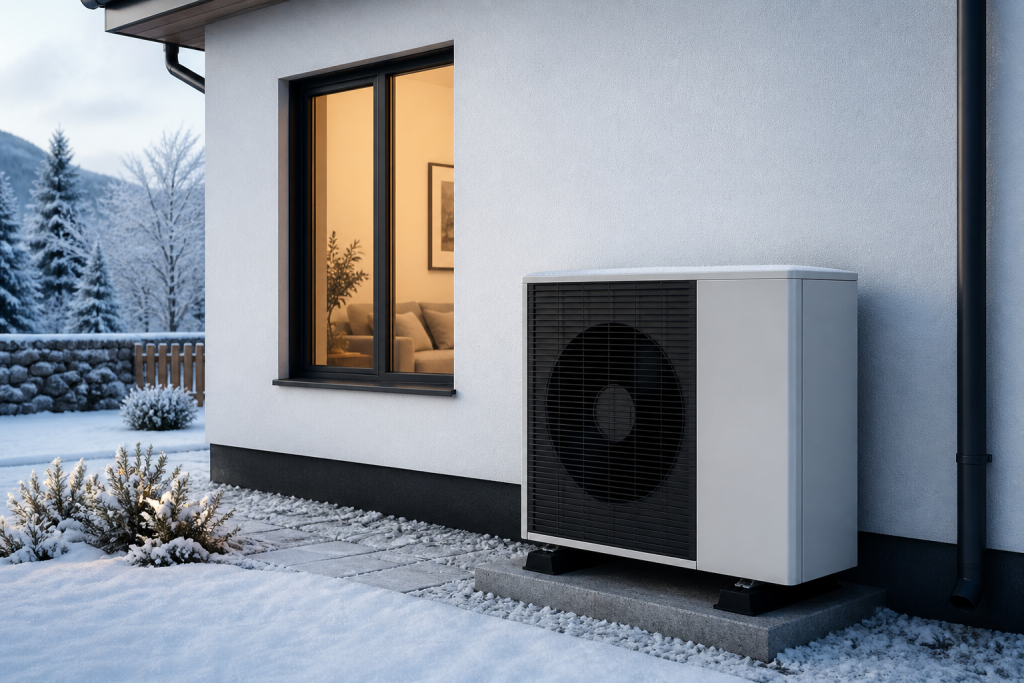
With energy bills continuing to rise across the UK, homeowners are searching for smarter, greener, and more cost-effective ways to heat their homes. One technology that has rapidly gained popularity is the air source heat pump. However, many people still ask the same question: Can air source heat pumps really work efficiently during cold UK winters? The answer is yes. Modern air source heat pumps are specifically designed to operate efficiently even in freezing conditions. Thanks to advanced heating technology, improved compressors, and intelligent controls, these systems can continue delivering reliable heating and hot water even when outdoor temperatures drop well below zero. In this guide, we’ll explain how air source heat pumps perform during winter, their efficiency levels, running costs, benefits, and why they are becoming one of the most popular renewable heating solutions across the UK. What Is an Air Source Heat Pump? An air source heat pump is an energy-efficient heating system that extracts heat from the outside air and transfers it into your home to provide heating and hot water. Unlike traditional gas boilers that generate heat by burning fuel, heat pumps transfer existing heat energy using refrigerant technology and electricity. Even cold outdoor air contains thermal energy that can be captured and converted into usable heat. This process allows heat pumps to achieve significantly higher efficiency levels compared to conventional heating systems. Many modern systems can deliver more than 300% efficiency, meaning they can produce 3 to 5 units of heat for every 1 unit of electricity consumed. How Do Air Source Heat Pumps Work in Winter? One of the biggest misconceptions about air source heat pumps is that they stop working in cold weather. In reality, modern systems are built specifically for year-round operation, including freezing winter conditions. The heating process works as follows: Advanced systems automatically adjust performance depending on outdoor temperatures, helping maintain reliable heating throughout winter. Do Heat Pumps Work in Freezing Temperatures? Yes, absolutely. Modern air source heat pumps are designed for cold-climate performance and can continue operating efficiently in temperatures as low as: This makes them highly suitable for UK winters, where temperatures are generally much milder than many European countries already using heat pumps successfully. Countries such as Norway, Sweden, and Finland rely heavily on heat pump technology despite experiencing significantly colder winters than the UK. Why the UK Climate Is Ideal for Heat Pumps The UK climate is actually very well suited for air source heat pumps. Unlike extremely cold regions with prolonged sub-zero temperatures, the UK typically experiences moderate winters with temperatures averaging between 0°C and 7°C. Heat pumps perform most efficiently in stable, moderate climates, making the UK an excellent environment for renewable heating systems. Because winters are relatively mild, air source heat pumps can maintain strong efficiency levels for most of the year. Advanced Technology That Improves Winter Performance Modern heat pumps include several advanced technologies that improve efficiency and reliability during cold weather. DC Inverter Compressors DC inverter technology allows the compressor to automatically adjust its speed based on heating demand. Benefits include: Unlike traditional boilers that repeatedly switch on and off, inverter systems run smoothly and efficiently. Enhanced Vapour Injection (EVI) Technology Enhanced Vapour Injection technology is specifically designed for cold climates. It improves heating performance during freezing temperatures by increasing compressor efficiency and heating capacity. This technology helps maintain strong performance even in extreme winter conditions. Intelligent Defrost Systems Frost can naturally build up on outdoor units during winter. Modern heat pumps use intelligent defrost systems that automatically detect frost accumulation and activate defrost mode only when necessary. This helps: Smart Heating Controls Many modern systems include smart WiFi-enabled controls that allow homeowners to: Smart controls help optimise comfort while reducing running costs. Are Air Source Heat Pumps Energy Efficient in Winter? Yes, air source heat pumps remain highly energy efficient during winter. Although efficiency levels naturally decrease slightly in colder temperatures, they still outperform many traditional electric heating systems and can compete strongly with gas boilers. Heat pump efficiency is measured using COP (Coefficient of Performance). Examples include: This means heat pumps can generate multiple units of heat for every unit of electricity consumed. Even during winter, modern systems continue operating at impressive efficiency levels. Can Heat Pumps Reduce Heating Bills? Air source heat pumps can help reduce heating costs, particularly when combined with: Potential financial benefits include: As UK energy prices continue to rise, renewable heating systems provide better protection against future fuel cost increases. Government Grants for Heat Pumps The UK government currently supports renewable heating installations through the Boiler Upgrade Scheme. Eligible homeowners may qualify for grants of up to £7,500 towards the installation of an air source heat pump. This significantly reduces upfront installation costs and encourages more households to transition to renewable heating solutions. Are Heat Pumps Better Than Gas Boilers? Air source heat pumps offer several advantages over traditional gas boilers. Lower Carbon Emissions Heat pumps use renewable energy from the outside air, helping reduce household carbon emissions. Greater Energy Efficiency Modern heat pumps can achieve efficiencies well above traditional heating systems. Safer Heating Solution Because heat pumps do not burn fuel, there is no risk of carbon monoxide leaks or gas combustion hazards. Lower Maintenance Requirements Heat pumps generally require less maintenance than traditional boiler systems. Future-Proof Heating As the UK moves toward net-zero carbon targets, renewable heating technologies are becoming increasingly important. Are Heat Pumps Suitable for Older Homes? Yes, many older UK homes can successfully install air source heat pumps. However, improving insulation and heating efficiency can help maximise performance. Recommended upgrades may include: A professional installer can determine the most suitable setup for your property. Common Myths About Heat Pumps in Winter “Heat Pumps Don’t Work in Cold Weather” This is false. Modern systems are specifically engineered for low-temperature operation. “Heat Pumps Only Work in New Homes” Heat pumps can also work effectively in existing and older properties. “Heat Pumps Are Noisy” Modern systems operate quietly, with some units
Why Businesses Are Switching to Air Source Heat Pumps
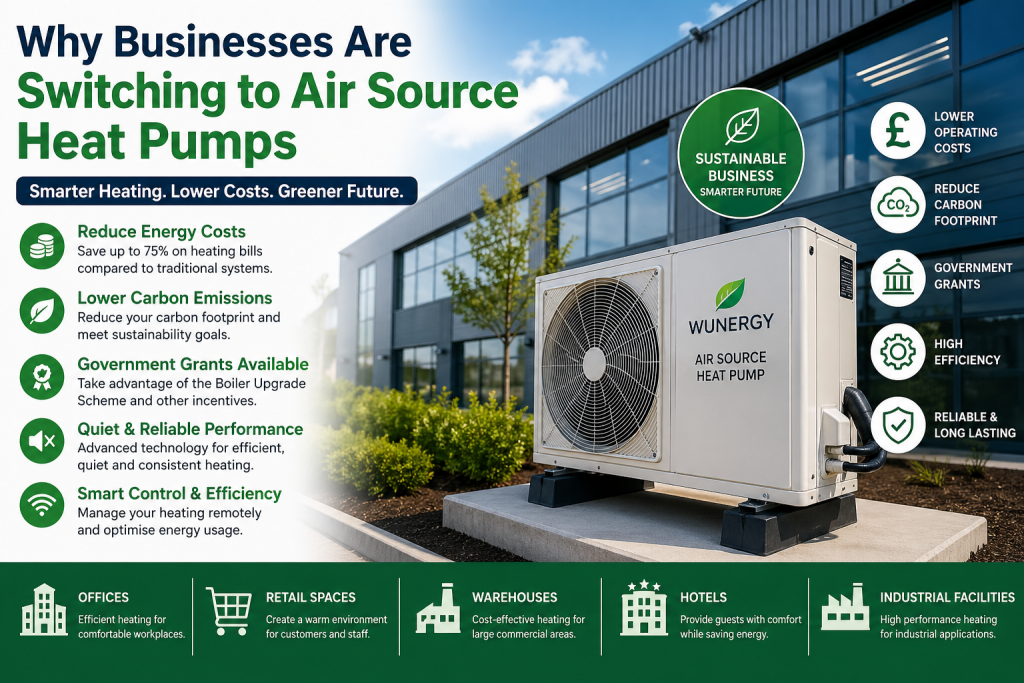
Rising energy prices, stricter environmental regulations, and the push toward sustainability are forcing businesses across the UK to rethink how they heat their buildings. Traditional systems like gas boilers are becoming increasingly expensive to run and maintain, while also contributing heavily to carbon emissions. As a result, many organisations are now turning to air source heat pumps as a smarter, more sustainable alternative. These systems not only reduce operational costs but also align with long-term environmental goals and government policies. In this guide, we’ll explore why businesses are making the switch, how air source heat pumps work, and the key benefits they offer for commercial applications. What Is an Air Source Heat Pump? An air source heat pump (ASHP) is an energy-efficient system that extracts heat from the outside air and transfers it indoors to provide heating and hot water. Even in colder temperatures, these systems can absorb ambient heat and convert it into usable energy. Unlike traditional heating systems that generate heat by burning fuel, heat pumps simply move heat from one place to another—making them significantly more efficient. Why Businesses Are Moving Away from Traditional Heating 1. Rising Energy Costs Gas and electricity prices in the UK have seen significant fluctuations in recent years. Businesses relying on conventional heating systems are facing unpredictable and often increasing utility bills. Air source heat pumps offer a solution by using less electricity to produce more heat, helping stabilise and reduce energy expenses. 2. Carbon Reduction Targets The UK government has introduced strict carbon reduction targets, pushing businesses toward greener energy solutions. Companies are now expected to actively reduce their carbon footprint. Switching to air source heat pumps can significantly lower emissions, making it easier for businesses to meet sustainability goals and comply with regulations. 3. Future-Proofing Against Regulations With the gradual phase-out of gas boilers and increasing environmental legislation, businesses are looking for future-proof heating systems. Heat pumps are widely considered a long-term solution that aligns with the UK’s net-zero strategy. Key Benefits of Air Source Heat Pumps for Businesses 1. Significant Cost Savings One of the biggest reasons businesses are switching is the potential for up to 75% savings on heating costs compared to traditional electric systems. Because heat pumps can deliver more energy than they consume, they drastically reduce energy usage and operational costs over time. 2. High Energy Efficiency Air source heat pumps can achieve efficiency levels of over 300%, meaning they produce three times more energy than they consume. This is measured using the Coefficient of Performance (COP), which highlights their superior efficiency. 3. Lower Carbon Emissions By using renewable energy from the air, heat pumps significantly reduce greenhouse gas emissions. This not only benefits the environment but also enhances your company’s sustainability profile. 4. Government Incentives & Grants Businesses in the UK may be eligible for financial support through schemes like the Boiler Upgrade Scheme, which offers grants to offset installation costs. These incentives make switching to heat pumps more affordable and attractive. 5. Versatility Across Industries Air source heat pumps are suitable for a wide range of applications, including offices, retail spaces, warehouses, hotels, industrial facilities, and residential developments. Their flexibility makes them an ideal solution for businesses of all sizes. 6. Quiet Operation Modern heat pumps are designed with advanced noise-reduction technology, making them suitable even for noise-sensitive environments like offices or residential areas. 7. Smart Controls & Automation Many systems come with smart controls, allowing businesses to monitor and adjust heating remotely. This improves efficiency, reduces waste, and provides greater control over energy usage. How Air Source Heat Pumps Improve Business Operations Switching to an air source heat pump isn’t just about saving money—it can also improve overall operational efficiency. Heat pumps provide steady and reliable heating, ensuring comfortable indoor environments for employees and customers. Compared to traditional boilers, heat pumps have fewer moving parts and require less maintenance, reducing long-term service costs. Sustainability is becoming a key factor for customers and clients. Businesses that invest in eco-friendly technologies can strengthen their brand reputation and attract environmentally conscious consumers. Are Air Source Heat Pumps Suitable for Your Business? While air source heat pumps are highly versatile, their suitability depends on factors such as building size and insulation, current heating system, energy usage patterns, and available outdoor space. A professional assessment can help determine the best solution tailored to your business needs. Installation Process Explained The installation of an air source heat pump typically involves a site survey and assessment, system design and planning, installation of the outdoor unit, connection to the heating system, and final testing and commissioning. With expert installers, the process is smooth and minimally disruptive to business operations. Long-Term ROI for Businesses Although the upfront cost of installing a heat pump can be higher than traditional systems, the long-term return on investment is substantial. Businesses benefit from lower energy bills, reduced maintenance costs, government incentives, and increased property value. Over time, these savings often outweigh the initial investment. The Future of Commercial Heating As the UK moves toward a low-carbon economy, air source heat pumps are expected to play a major role in the future of commercial heating. Businesses that adopt this technology early will not only save money but also stay ahead of regulatory changes and market trends. Conclusion Air source heat pumps are quickly becoming the preferred choice for businesses looking to reduce costs, improve efficiency, and meet sustainability goals. With rising energy prices and increasing environmental responsibilities, switching to a heat pump is no longer just an option—it’s a smart business decision. Whether you run a small office or a large industrial facility, investing in an air source heat pump can deliver long-term benefits for both your business and the environment. Call to Action Ready to reduce your energy costs and future-proof your business? Contact Wunergy today for a free survey and personalised quote.
How much does an air source heat pump cost to install in the UK? (2026 guide)
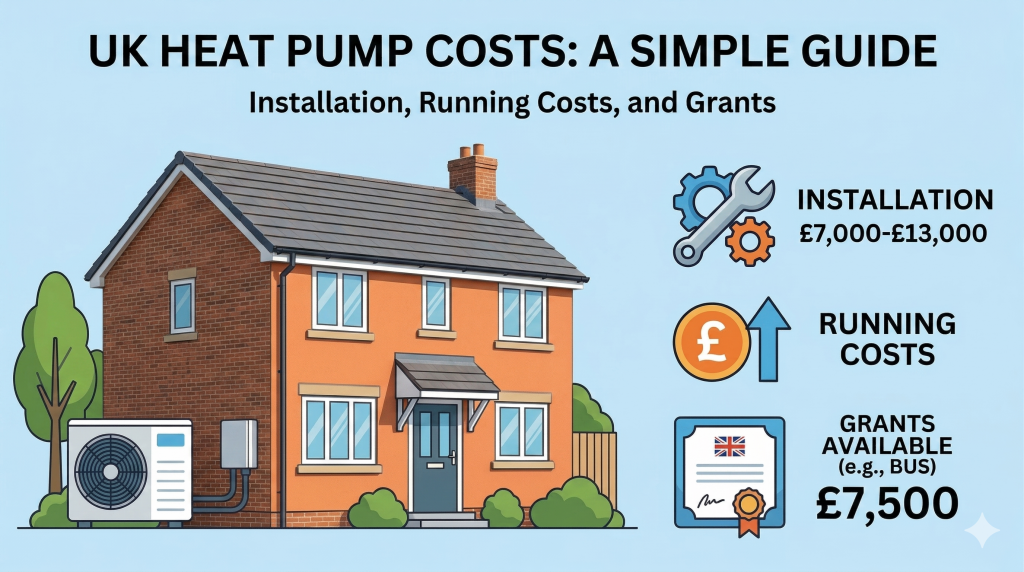
Short answer: around £12,500 on average before any grant, according to the latest government Boiler Upgrade Scheme figures. After the £7,500 BUS grant, most homeowners pay somewhere between £3,500 and £6,000. Some smaller properties pay less. Longer answer: it depends on your house, your insulation, your existing radiators, and what the survey turns up. The headline number is a starting point, not a quote. This guide goes through the real numbers, by property size, by what is and is not included, by what adds cost that most installers do not volunteer upfront. There is a West Midlands section near the end with figures specific to Birmingham, Worcester, and the surrounding towns. 2026 cost summary What you pay by property size System size drives most of the price difference. A small flat needs a 5 kW unit. A large detached house might need 14 or 16 kW. That is not just a bigger box, it is more pipework, longer install time, and a higher unit price. These figures cover the heat pump unit, labour, hot water cylinder, standard pipework, and commissioning. Radiator upgrades, electrical work, and other extras are separate, that list comes next. Property System Cost before grant After £7,500 BUS grant VAT saving (0%) 1 to 2 bed flat/house 5 to 7 kW £7,000 to £10,000 £0 to £2,500 ~£350 to £500 2 to 3 bed semi/terrace 7 to 10 kW £9,000 to £12,500 £1,500 to £5,000 ~£450 to £625 3 to 4 bed detached 10 to 13 kW £11,000 to £15,000 £3,500 to £7,500 ~£550 to £750 4 to 5 bed large property 13 to 16 kW £14,000 to £18,000 £6,500 to £10,500 ~£700 to £900 VAT saving calculated at 0% versus 5% standard rate. Relief confirmed until 31 March 2027. Source: HMRC. What Wunergy’s price includes Every installation covers: What is not in that list depends on the property. Older houses usually need more. The extras that catch people out Comparison websites quote national averages. They do not show you what a surveyor finds when they actually walk around your house. These are the most common additions: What Typical cost When it applies Radiator upgrade (per radiator) £150 to £400 Older or undersized rads New hot water cylinder £400 to £900 No cylinder, or current too small Consumer unit upgrade £500 to £1,000 Old electrics that cannot handle load Scaffolding £300 to £600 Unit needs to go high on a wall Pipework changes £200 to £800 Narrow-bore or complex existing pipework Smart controls/thermostat £150 to £400 Recommended on all installs Annual service £150 to £300/yr Every year, keeps warranty valid Watch this when comparing quotes A quote of £8,000 that excludes three radiator upgrades and a new cylinder is not cheaper than a £9,500 quote that includes them. Always ask what is and is not in the price. Wunergy provides a fully itemised quote after the free survey so nothing comes as a surprise later. Why some jobs cost more than others Insulation and heat loss Before any system gets designed, a heat loss calculation works out how much heat your home bleeds on a cold day. Poor insulation means the number is higher, which means a bigger system. A well-insulated three-bed semi typically needs an 8 kW unit. The same house with no loft insulation and single glazing might need 12 kW. That is a difference of roughly £2,000 to £3,000 in unit cost before labour is touched. Radiators Gas boilers push water at 60 to 70 degrees. Heat pumps run at 35 to 50 degrees. Lower flow temperatures mean older radiators often do not give off enough heat, they were sized for the hotter system. Replacing undersized radiators is one of the most common additional costs. Budget £150 to £400 per radiator. A three-bed house typically has seven to nine. Do that maths before dismissing the upgrade. Existing pipework and electrics Narrow-bore pipework in older properties sometimes needs replacing before a heat pump can circulate water properly. Outdated consumer units occasionally need upgrading to handle the additional load. Neither is guaranteed, but both get flagged during a proper survey. Where the unit goes Most outdoor units go on a wall bracket or a small ground pad. Straightforward. But if the best location for airflow means scaffold access or a longer pipe run through the building, that adds to the job. Brand and spec Wunergy fits Samsung units with an ErP A+++ rating. That is the top efficiency band and a requirement to access the Boiler Upgrade Scheme grant. Budget brands exist. Some perform fine. Some do not. The difference shows up in the bills every winter and in how easy it is to get parts if something needs fixing in year eight. Running costs once it is in Electricity is more expensive per unit than gas. That is just the current reality. Ofgem’s April to June 2026 average rates: 24.67p per kWh for electricity, 5.74p per kWh for gas. What changes the picture is efficiency. A heat pump with a COP of 3.0 produces 3 kWh of heat from every 1 kWh of electricity. At 24.67p input, that works out at about 8.2p per kWh of useful heat. A gas boiler at 90 percent efficiency delivers heat at roughly 6.4p per kWh. The gap is smaller than it looks. And it disappears entirely if you are comparing against oil, LPG or electric heating. Heating system Annual running cost vs heat pump Air source heat pump (COP 3.0) £800 to £1,100 Baseline Gas boiler, A-rated new £900 to £1,300 Similar or slightly more Oil boiler £1,400 to £2,000 40 to 80% more LPG boiler £1,600 to £2,200 60 to 100% more Electric storage heaters £2,200 to £3,000 More than double Estimates use Ofgem April to June 2026 price cap and average heating consumption for a 3-bed semi. Real costs vary with insulation quality, system design, and how the thermostat is used. The £7,500 grant: who gets it The Boiler Upgrade Scheme pays £7,500 directly to