
What Size Heat Pump Do I Need for My Home? A UK Homeowner’s Guide
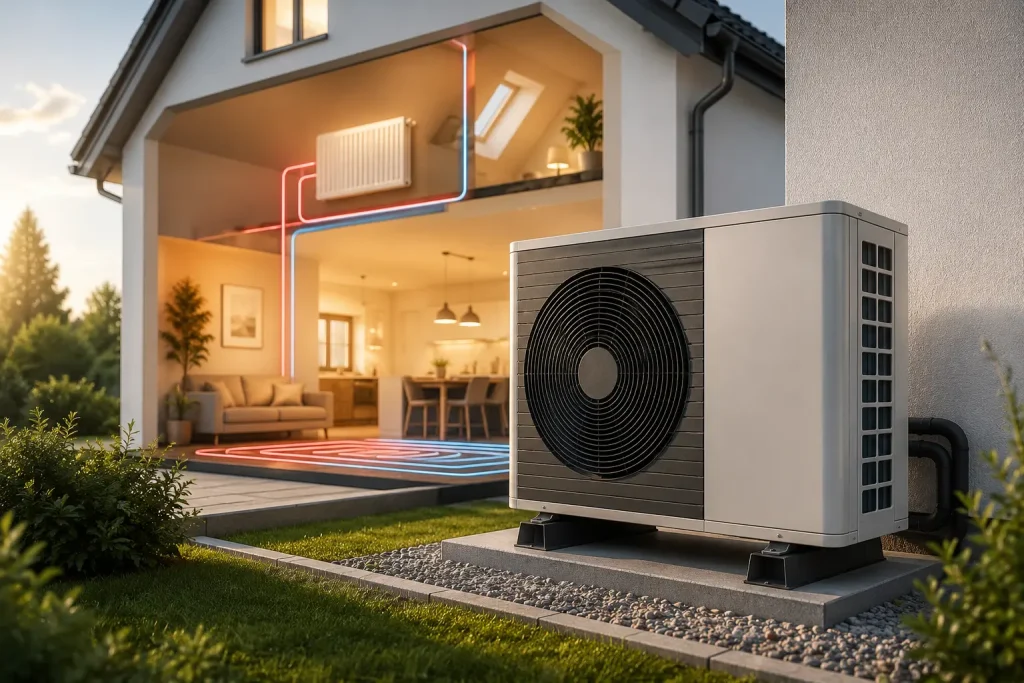
Choosing the right heat pump size is one of the most important decisions when upgrading your home’s heating system. A heat pump that is too small may struggle to maintain comfortable indoor temperatures during colder periods. A system that is unnecessarily large can cost more to install and may not operate as efficiently as a correctly sized system. This is why choosing a heat pump should never be based simply on the number of bedrooms in a property. A professional heat pump installation starts with understanding the home’s actual heating requirement. At Wunergy, property assessments are used to determine the appropriate heating solution for each individual home rather than relying on a one-size-fits-all approach. What Does Heat Pump Size Mean? Heat pump capacity is normally expressed in kilowatts, or kW. The kW rating indicates the amount of heat the system can deliver under specified operating conditions. For example, you may come across air source heat pumps rated at 5 kW, 7 kW, 9 kW, 12 kW or larger capacities. However, choosing a 10 kW system simply because you have a large house is not a reliable method of sizing. Two houses with the same number of bedrooms can have completely different heating requirements. One may have modern insulation, double glazing and a compact layout, while another may be an older detached property with high ceilings, larger rooms and greater heat loss. The correct system therefore depends on the building rather than the bedroom count alone. How Is a Heat Pump Correctly Sized? Professional installers calculate the property’s heat loss to determine how much heating capacity is required. A heat loss calculation considers the amount of heat escaping from different parts of the property. This can include: The result gives the installer a much clearer picture of the heating demand. This calculation is far more accurate than simply matching the property to a standard heat pump size. Does the Number of Bedrooms Matter? Bedrooms can provide a rough indication of property size, but they should not be used as the main method of selecting a heat pump. For example, a well-insulated three-bedroom modern home may require significantly less heating capacity than an older three-bedroom detached property. Likewise, a large four-bedroom house with good insulation may have a lower heat requirement than a poorly insulated five-bedroom property. The building’s heat loss is what really matters. What Size Heat Pump for a 2-Bedroom Home? A smaller two-bedroom property may require a relatively modest heat pump capacity. However, there is no universal kW rating that applies to every two-bedroom house. The installer needs to consider: A professional survey can establish whether a smaller system is sufficient or whether additional capacity is required. What Size Heat Pump for a 3-Bedroom House? Three-bedroom homes are among the most common property types considered for air source heat pump installations. Depending on the building’s construction, insulation and heat loss, a system somewhere in the mid-range may be suitable. But homeowners should avoid choosing a heat pump simply because a neighbour with a similar-sized property has installed a particular model. Your house may have different insulation, windows, floor area and heating requirements. A room-by-room heat loss calculation provides a much better basis for choosing the correct capacity. What Size Heat Pump for a 4-Bedroom House? A four-bedroom property will generally have a greater heating demand than a smaller home, but the required heat pump capacity can vary considerably. A modern, well-insulated four-bedroom house may require less capacity than an older property with poor insulation. The same principle applies to larger detached homes. Rather than asking, “What size heat pump is recommended for a four-bedroom house?”, the more useful question is: “What is the calculated heat loss of my property?” That figure can then be used to select an appropriately sized system. Why Oversizing a Heat Pump Can Be a Problem It may seem logical to choose a larger heat pump just to make sure the house has enough heat. However, bigger does not automatically mean better. An oversized system may cost more to purchase and install without providing any meaningful benefit. Depending on the system and controls, excessive capacity can also lead to less efficient cycling and make it harder for the system to operate at its optimum output. The goal should not be to install the biggest possible heat pump. The goal is to install the right-sized heat pump. Why Undersizing Can Also Cause Problems An undersized heat pump can create a different set of issues. If the system cannot meet the property’s heat demand during colder weather, homeowners may experience: This is why accurate heat loss calculations are so important. Correct sizing helps balance performance, comfort and efficiency. How Insulation Affects Heat Pump Size Insulation has a major impact on heating demand. A well-insulated home loses heat more slowly, meaning the heating system does not need to work as hard to maintain the desired indoor temperature. Important areas include: Loft Insulation Heat can escape through the roof when loft insulation is inadequate. Improving loft insulation can reduce heat loss and improve overall heating efficiency. Wall Insulation External walls can account for a significant proportion of heat loss in older properties. The construction and insulation of the walls should therefore be considered during a heat pump assessment. Windows and Doors Older single-glazed windows and poorly sealed doors can allow heat to escape. Modern glazing and appropriate draught reduction can help improve thermal performance. Floor Insulation Heat can also be lost through floors, particularly in properties with suspended timber floors. A professional assessment can identify where improvements may provide the greatest benefit. Do Radiators Affect Heat Pump Sizing? Yes. Heat pumps typically operate at lower flow temperatures than traditional gas boilers. This means the heating emitters need to be capable of delivering enough heat at those lower temperatures. If existing radiators are too small, the heat pump may need to operate at higher temperatures, potentially reducing efficiency. In some properties, replacing selected radiators with larger or higher-output models
Why Heat Pumps Are the Future of Home Heating
The way we heat our homes is changing. Rising energy prices, growing environmental awareness, and advances in renewable technology are encouraging more homeowners to move away from traditional gas and oil boilers. Among the many heating solutions available today, heat pumps are emerging as the future of home heating. Heat pumps are no longer considered a niche technology. They have become one of the most efficient, reliable, and environmentally friendly ways to heat homes while reducing energy consumption and carbon emissions. As the UK works towards achieving net-zero carbon emissions, heat pumps are expected to play a central role in transforming how homes are heated. At Wunergy, we help homeowners embrace this transition by providing expert advice and professional heat pump solutions that deliver long-term comfort, energy savings, and sustainability. In this guide, we’ll explain why heat pumps are becoming the preferred choice for modern homes and what makes them a smart investment for the future. The Growing Need for Smarter Home Heating For decades, gas boilers have been the standard heating system in UK homes. While they have provided reliable heating, they rely on fossil fuels that contribute to carbon emissions and fluctuating energy costs. Today’s homeowners are looking for alternatives that offer: Heat pumps meet all of these requirements, making them one of the most forward-thinking heating technologies available. What Is a Heat Pump? A heat pump is a renewable heating system that transfers heat from the outside air into your home. Instead of generating heat by burning fuel, it captures naturally occurring heat and uses electricity to move that heat indoors. This process makes heat pumps incredibly efficient because they can produce several units of heat for every unit of electricity they consume. Air source heat pumps, in particular, have become the most popular choice for UK homeowners due to their versatility and suitability for a wide range of properties. Outstanding Energy Efficiency One of the biggest reasons heat pumps represent the future of home heating is their exceptional efficiency. Unlike traditional boilers, which convert fuel into heat, heat pumps transfer existing heat from the environment. This means they require significantly less energy to produce the same level of comfort. A well-designed heat pump system can: At Wunergy, we carefully size every heat pump system to maximise efficiency and ensure optimal performance for each property. Lower Running Costs Over Time While installing a heat pump requires an initial investment, many homeowners experience lower running costs over the long term. Factors that contribute to these savings include: As energy prices continue to evolve, efficient heating systems are becoming increasingly valuable for homeowners seeking greater control over household expenses. Supporting a Greener Future Climate change has made sustainability an important consideration for homeowners across the UK. Heating accounts for a significant proportion of residential carbon emissions. By switching to renewable heating systems such as heat pumps, households can reduce their environmental impact while continuing to enjoy comfortable indoor temperatures. Benefits include: Choosing a heat pump is not only an investment in your home but also a contribution to a more sustainable future. Designed for Modern Homes Heat pumps are suitable for a wide variety of property types, including: Even many older homes can successfully use heat pumps when combined with appropriate insulation and system design. At Wunergy, we assess every property individually to recommend the most suitable renewable heating solution. Consistent Comfort Throughout the Year Unlike conventional boilers that frequently switch on and off, heat pumps deliver gentle, continuous warmth. This approach provides: Many homeowners find that heat pumps create a more comfortable living environment than traditional heating systems. Heat Pumps Work in Cold Weather One of the most common misconceptions is that heat pumps stop working during winter. Modern air source heat pumps are specifically designed to operate efficiently in low outdoor temperatures commonly experienced across the UK. Advanced technology enables them to continue extracting heat even when outdoor temperatures fall below freezing. This makes them a dependable heating solution throughout the year. Quiet and Reliable Operation Modern heat pumps are engineered for quiet operation. Outdoor units generate minimal noise, allowing them to integrate comfortably into residential settings without causing significant disturbance. With routine servicing, heat pumps can provide reliable heating for many years while requiring relatively little maintenance. Government Support Encourages Adoption The UK Government continues to encourage homeowners to adopt renewable heating technologies. Financial support programmes have helped make heat pump installations more affordable, allowing more households to benefit from energy-efficient heating. Combined with long-term energy savings, these incentives improve the overall value of investing in a heat pump. Smart Home Integration Today’s heat pumps work seamlessly with modern smart home technology. Homeowners can often control their heating using: These features provide greater convenience while helping optimise energy consumption. Increasing Property Value Energy efficiency has become an important consideration for homebuyers. Properties equipped with modern renewable heating systems may become more attractive due to: Installing a heat pump can therefore contribute to both improved comfort and increased long-term property appeal. Why Professional Installation Matters Even the best heat pump will not perform efficiently if it is poorly designed or incorrectly installed. Professional installers consider: At Wunergy, every installation begins with a detailed assessment to ensure homeowners receive the most efficient heating solution for their property. Why Homeowners Choose Wunergy Choosing a trusted installer is just as important as selecting the right heating system. At Wunergy, we specialise in helping UK homeowners transition to renewable heating with confidence. Our services include: Our goal is to provide heating systems that deliver comfort, efficiency, and long-term value. The Future of Home Heating Is Already Here As technology continues to improve and demand for sustainable energy grows, heat pumps are becoming the preferred heating solution for homes across the UK. Their ability to provide efficient heating, reduce energy bills, lower carbon emissions, and integrate with smart home technology makes them one of the most future-proof investments homeowners can make. With government support, increasing awareness, and continual innovation, heat pumps
Air source heat pump problems: what is wrong and how to fix it
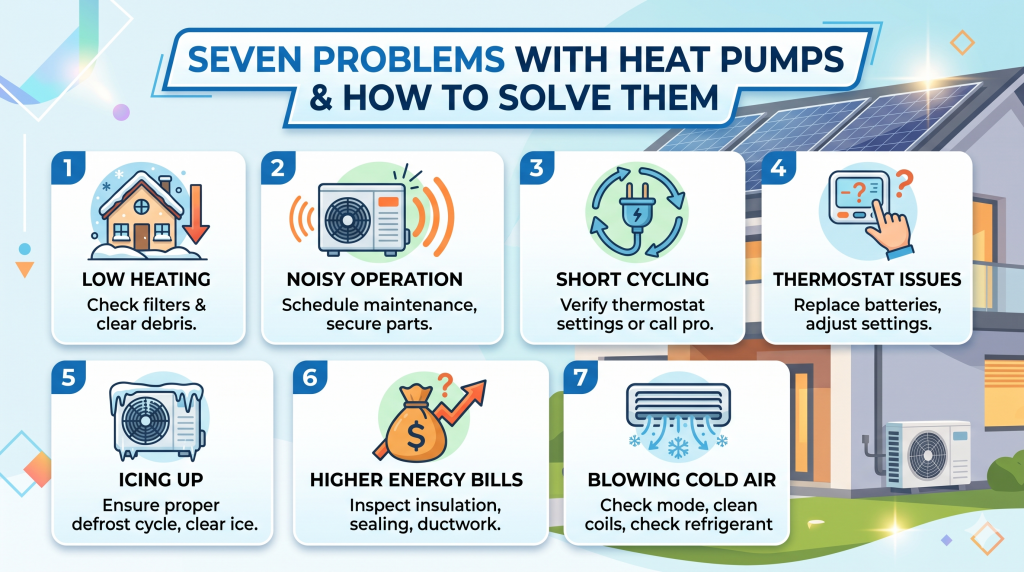
Something has gone wrong with your heat pump. The house is not warming up, or the outdoor unit is making a noise you have not heard before, or the radiators feel barely warm. You need answers quickly. Most heat pump faults fall into a small number of categories. Some you can sort yourself in five minutes. Others need a qualified engineer. This guide goes through each problem plainly, tells you what to check before calling anyone, what repair costs look like in 2026, and when it makes more sense to replace the system rather than fix it. Before anything else: the quick checks Run through these before assuming there is a serious fault. A surprising number of call-outs turn out to be one of these: If none of those fix it, read on. Problem 1: the heat pump is not heating the house This is the most common complaint, especially during cold weather. The system is running, you can hear it, but the house is not warming up properly. Radiators feel lukewarm rather than hot This is not necessarily a fault. Heat pumps run at lower flow temperatures than gas boilers, typically 35 to 50 degrees rather than 65 to 75. Radiators will feel warm to the touch rather than hot. As long as the rooms are reaching the set temperature, the system is working as designed. If rooms are not reaching temperature and it is taking much longer than usual, the likely causes are: The heat pump turns on but nothing happens Check the thermostat first. If that is fine, check the breaker. If the unit is completely silent with no lights on the controller, there is likely a power supply issue. Call an engineer. If the unit starts and the outdoor fan runs but there is still no heat output, the refrigerant may be low. You will sometimes hear a hissing sound near the outdoor unit. That is a refrigerant leak. Do not continue running the system and call a qualified F-Gas engineer. The reversing valve is stuck If the system heats in summer (cooling mode) but will not heat in winter, or vice versa, the reversing valve is the likely culprit. This valve switches the direction of refrigerant flow to change between heating and cooling modes. When it sticks, the system runs in the wrong mode. A stuck reversing valve needs a professional. It is not a DIY repair. Problem 2: the outdoor unit is icing up Some frost on the outdoor unit in winter is completely normal. The system enters a defrost cycle periodically — you may hear it switch modes briefly, and the unit may produce a little steam. That is fine. Ice that does not clear after a defrost cycle, or heavy ice building up on the coils, is a problem. Possible causes: Do not attempt to chip or melt ice from the outdoor unit with hot water. This can cause damage. If the ice is not clearing after a defrost cycle, switch the system off and call an engineer. Problem 3: the heat pump is running constantly Heat pumps run differently from gas boilers. A boiler fires up, heats the water quickly, and shuts off. A heat pump runs longer at lower output. Longer run times are normal and actually more efficient than short cycles. Constant running becomes a problem when the house still is not reaching temperature despite the system never switching off. Common reasons: If it is just a cold day and the system is running more than usual, that is expected behaviour. If it never stops even in mild weather and rooms are still cold, get it checked. Problem 4: strange noises Heat pumps make some noise, the outdoor fan, compressor hum, and the occasional click or gurgle during defrost or startup are all normal. New or unusually loud sounds are worth paying attention to. Rattling or vibrating Usually means something is loose. Check that the outdoor unit is still sitting level on its pad and that the fixings are secure. A loose panel or mounting bracket vibrates against the unit casing. If tightening everything does not stop it, the noise is coming from inside and needs an engineer. Grinding or shrieking Switch the system off immediately. This usually indicates a problem with the fan motor or compressor. Running it further risks causing more damage. Call an engineer. Hissing or gurgling Gurgling can mean low refrigerant. Hissing almost always means a refrigerant leak. Turn the system off and call an F-Gas certified engineer. Refrigerant is under pressure and potentially toxic, this is not something to investigate yourself. Clicking that will not stop A single click at startup and shutdown is normal. Repeated clicking when the system is trying to start can indicate a faulty starter capacitor or contactor. Both need a professional. Problem 5: high electricity bills If bills have gone up sharply since installation or after a period of normal running, a few things could be happening. Worth noting: electricity is currently more expensive per unit than gas. If you switched from gas heating, your electricity bill will be higher even with a working, efficient heat pump. The question is whether the total energy spend is lower. That depends on the COP of your system and your electricity tariff. Problem 6: the radiators feel lukewarm and the house feels damp This is something competitors rarely discuss, but it has become one of the most common complaints from UK homeowners in 2025 and 2026. Heat pumps run at lower temperatures than gas boilers. When a heat pump is installed in a home without upgrading the radiators or improving insulation, the house heats up more slowly, some rooms may not reach temperature, and condensation can build up on cold surfaces, particularly on north-facing walls and in rooms with poor airflow. The technology is not at fault. The installation is. A heat pump retrofitted into a poorly insulated home without a proper heat loss calculation will underperform. The fix involves: If