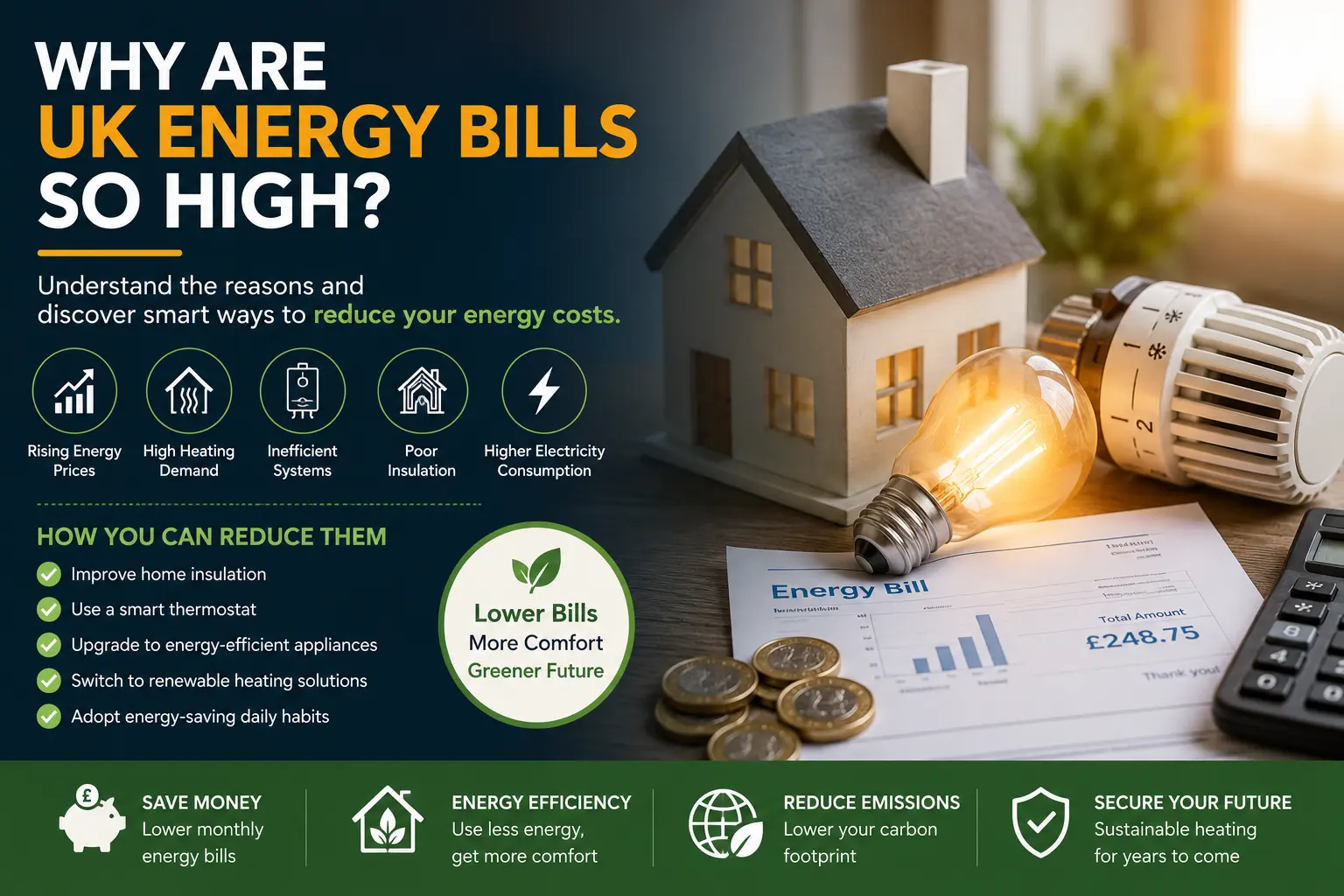

Energy bills have become one of the biggest financial concerns for households across the United Kingdom. Whether you live in a small apartment, a family home, or a larger property, you’ve likely noticed that the cost of heating and powering your home has increased significantly over the past few years. Many homeowners wonder why these costs continue to rise and, more importantly, what they can do to reduce them.
The good news is that while some factors affecting energy prices are beyond your control, there are many practical steps you can take to lower your monthly bills. From improving your home’s insulation to upgrading to renewable heating systems like air source heat pumps, investing in energy efficiency can lead to long-term savings while making your home more comfortable and environmentally friendly.
Understanding Why UK Energy Bills Keep Rising
Energy prices are influenced by a combination of global markets, government policies, infrastructure costs, and household energy consumption. Although energy suppliers set tariffs, many external factors contribute to the amount homeowners ultimately pay.
Rising Wholesale Energy Prices
One of the biggest drivers of higher energy bills is the increase in wholesale energy prices. Energy suppliers purchase electricity and gas from national and international markets before supplying them to homes and businesses.
When demand increases or supply becomes limited, wholesale prices rise. Suppliers then pass these increased costs on to consumers through higher tariffs.
Several global events have contributed to recent price increases, including:
- Higher global demand for natural gas
- Reduced energy supplies
- Geopolitical tensions affecting fuel imports
- Fluctuations in international energy markets
- Seasonal increases in energy demand during colder months
Although wholesale prices may fluctuate over time, they remain one of the largest contributors to household energy costs.
Increased Dependence on Heating During Winter
The UK’s climate means that heating systems are used for several months each year. During autumn and winter, households consume considerably more gas or electricity to maintain comfortable indoor temperatures.
Common winter energy demands include:
- Central heating
- Hot water
- Electric heaters
- Heated towel rails
- Longer lighting hours
- Increased appliance use indoors
Homes with poor insulation require even more energy because heat escapes quickly through walls, roofs, windows, and floors.
Older Heating Systems Waste Energy
Many UK homes still rely on ageing gas boilers that operate far less efficiently than modern heating systems.
Older boilers often:
- Consume more fuel
- Lose heat during operation
- Require frequent repairs
- Produce higher emissions
- Cost more to run
Replacing an outdated heating system with a modern renewable alternative can significantly reduce annual heating costs.
Poor Home Insulation
One of the biggest hidden causes of expensive energy bills is poor insulation.
Even the most efficient heating system struggles when heat constantly escapes from the property.
Common areas where heat is lost include:
- Loft spaces
- External walls
- Windows
- Doors
- Floors
- Chimneys
Improving insulation helps your heating system work more efficiently because it retains warmth for longer periods.
Higher Electricity Demand
Modern homes contain more electrical devices than ever before.
Everyday appliances include:
- Televisions
- Computers
- Gaming consoles
- Smart home devices
- Kitchen appliances
- Electric vehicle chargers
Although individual devices may not consume much electricity, their combined energy usage throughout the day contributes significantly to monthly bills.
Inflation and Infrastructure Costs
Energy suppliers must also invest in maintaining and improving national infrastructure.
Costs include:
- Maintaining electricity networks
- Upgrading transmission systems
- Renewable energy investment
- Customer services
- Environmental programmes
Some of these costs are reflected in household energy tariffs.
Why Energy Efficiency Matters More Than Ever
Energy efficiency is no longer simply about saving money.
Modern homeowners are increasingly looking for ways to:
- Reduce monthly expenses
- Improve indoor comfort
- Increase property value
- Lower carbon emissions
- Future-proof their homes
Small improvements made today can generate significant savings over the coming years.
Simple Changes That Can Reduce Your Energy Bills
Many homeowners assume reducing energy bills requires major renovations. While larger upgrades certainly help, smaller everyday changes also make a noticeable difference.
Turn Off Unused Appliances
Many electronic devices continue consuming electricity even when not actively being used.
Examples include:
- Televisions
- Chargers
- Gaming systems
- Desktop computers
- Kitchen appliances
Switching appliances off completely rather than leaving them on standby can reduce unnecessary electricity consumption.
Use LED Lighting
Replacing traditional bulbs with LED lighting is one of the easiest ways to reduce electricity usage.
LED bulbs:
- Use significantly less energy
- Last much longer
- Produce less heat
- Require less maintenance
Over time, these savings can add up across an entire household.
Install a Smart Thermostat
Smart heating controls allow homeowners to better manage when and how their heating system operates.
Benefits include:
- Remote temperature control
- Heating schedules
- Reduced unnecessary heating
- Improved energy efficiency
- Better comfort
Rather than heating an empty house, smart thermostats ensure energy is only used when needed.