
How to Prepare Your Home for an Air Source Heat Pump Installation
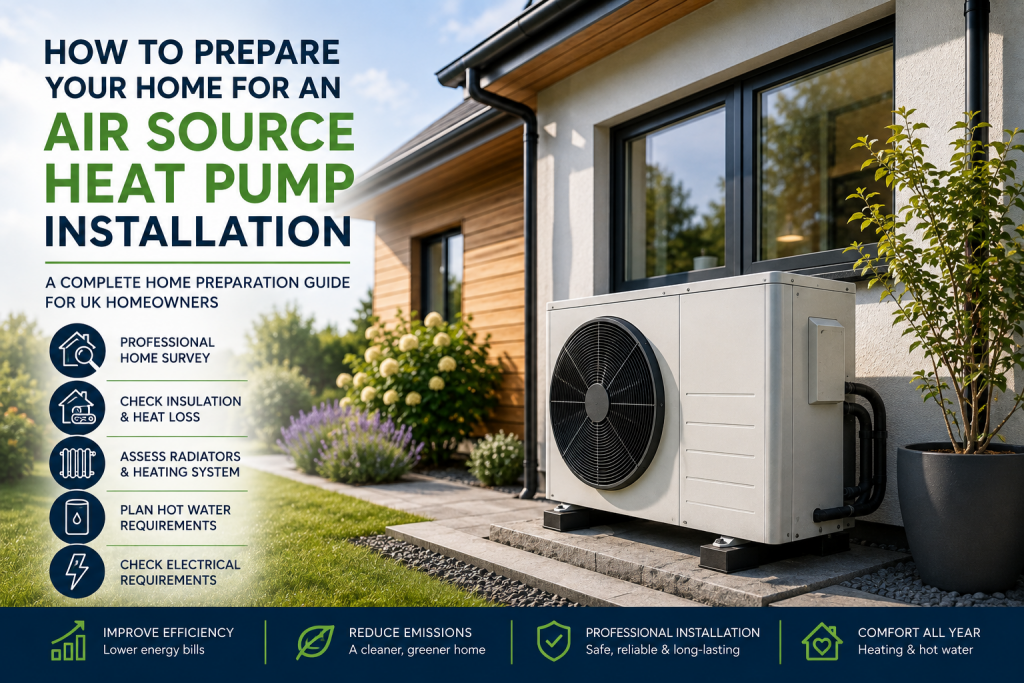
Air source heat pumps are becoming an increasingly popular option for UK homeowners who want a more efficient way to heat their homes. Unlike traditional heating systems that generate heat by burning fuel, an air source heat pump transfers heat from the outdoor air into your property. When properly designed and installed, the system can provide heating and hot water while helping reduce energy consumption and reliance on fossil fuels. However, choosing a heat pump is only the first step. Preparing your property correctly can have a significant impact on installation, performance, comfort and long-term efficiency. If you are considering an air source heat pump for your home, understanding what needs to be checked before installation can make the entire process much easier. From insulation and radiators to outdoor space and hot water requirements, several factors need to be considered before the system is installed. Why Home Preparation Matters Before Installing a Heat Pump An air source heat pump works differently from a conventional gas boiler. A boiler can quickly produce high-temperature water, while a heat pump generally works most efficiently by delivering heat at lower temperatures over longer periods. That difference means your home’s existing heating system, insulation and overall energy efficiency need to be considered carefully. A properly prepared property allows the heat pump to operate more efficiently and maintain a comfortable indoor temperature without unnecessary energy consumption. At Wunergy, each installation should be assessed according to the individual property rather than relying on a one-size-fits-all approach. A professional survey can identify the home’s heating requirements and highlight any improvements that may be beneficial before installation. 1. Start With a Professional Home Survey One of the most important steps is arranging a professional assessment before choosing your system. Every property is different. A small terraced house has very different heating requirements from a large detached property, while an older building may require different improvements compared with a modern, well-insulated home. A survey can consider factors such as: This information helps determine the appropriate heat pump capacity. Choosing a system simply because it has a particular kilowatt rating is not recommended. An oversized or undersized system may affect efficiency, comfort and operating costs. 2. Check Your Home’s Insulation Insulation is one of the most important considerations when preparing a property for low-temperature heating. Good insulation helps prevent heat from escaping through the roof, walls and floors. This reduces the amount of heat your heating system needs to replace. Before installation, homeowners should consider whether their property has suitable: This does not necessarily mean that every part of the property must be upgraded before a heat pump can be installed. The right improvements depend on the property’s condition and the results of a professional assessment. Improving insulation where appropriate can make it easier for a heat pump to maintain a stable indoor temperature. 3. Assess Your Existing Radiators Your existing radiators may be suitable for use with a heat pump, but this depends on their size, design and the heat requirements of each room. Because heat pumps generally operate at lower flow temperatures than traditional boilers, some properties may benefit from larger or higher-output radiators. This is why radiator assessment should form part of the planning process. Replacing every radiator is not automatically necessary. A professional installer can determine which radiators are appropriate and whether individual rooms require upgrades. In some cases, only selected radiators may need to be replaced. 4. Consider Underfloor Heating Underfloor heating can work particularly well with heat pumps because it provides a large surface area for distributing heat. Instead of concentrating heat through relatively small radiators, underfloor heating distributes warmth across a larger floor area. However, installing underfloor heating is a major project and is not essential for having an air source heat pump. Existing radiators can work with a heat pump when the system is correctly designed. If you are renovating your home at the same time as installing a heat pump, it may be worth discussing whether underfloor heating is appropriate for your property. 5. Think About the Outdoor Unit Location An air source heat pump requires an outdoor unit to extract heat from the surrounding air. The location of this unit should be considered carefully. The installer may assess: The unit should have sufficient airflow so it can operate effectively. A professional installer will also consider practical requirements such as how the system connects to the indoor heating components. Selecting the location early can help avoid unnecessary complications during installation. 6. Review Your Hot Water Requirements Preparing for a heat pump is not only about heating rooms. Most homes also need domestic hot water for showers, baths, washing and everyday household use. Depending on your existing setup, installing an air source heat pump may involve adding or upgrading a hot water cylinder. The size of the cylinder should reflect your household’s requirements. A larger family may require greater hot water storage than a one- or two-person household. Think about your typical hot water usage before the installation survey and discuss your requirements with your installer. 7. Understand How Your Heating Controls Will Change Heat pumps are designed to work differently from traditional boilers, so homeowners may need to adjust their expectations around heating controls. Instead of turning a boiler on for a short period to rapidly increase the temperature, a heat pump can be designed to provide steady, controlled heating. Modern systems can also incorporate smart controls, allowing homeowners to manage heating more conveniently. Wunergy’s systems include smart connected control options, allowing compatible systems to be managed through connected technology. Understanding how the controls work is important because correct operation can contribute to efficient performance. Your installer should explain the controls and show you how to use the system after commissioning. 8. Check Your Electrical Requirements Although heat pumps are highly efficient, they still require electricity to operate. Before installation, the electrical requirements of the proposed system should therefore be assessed. Your installer can determine whether the existing electrical setup is