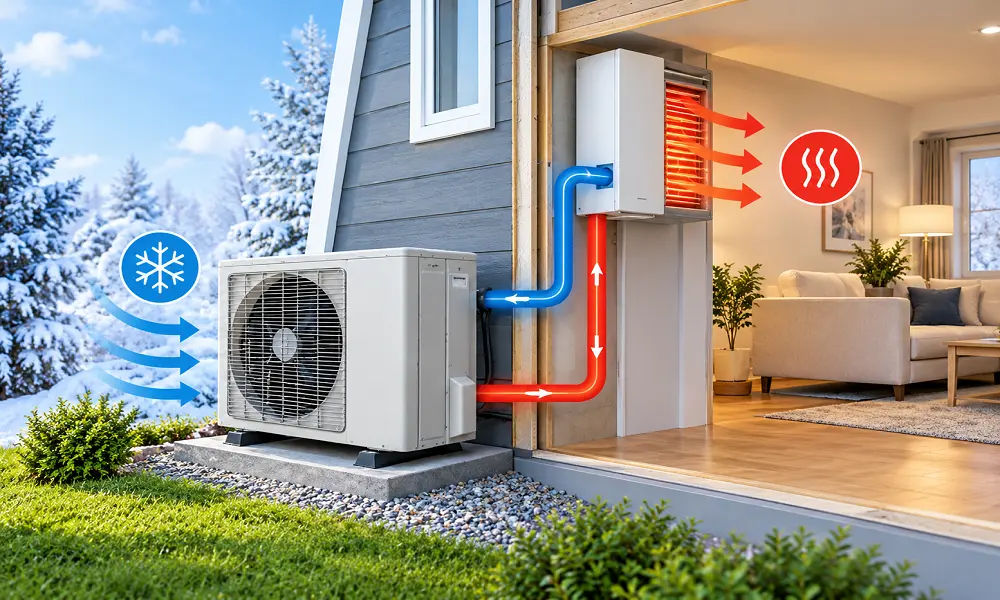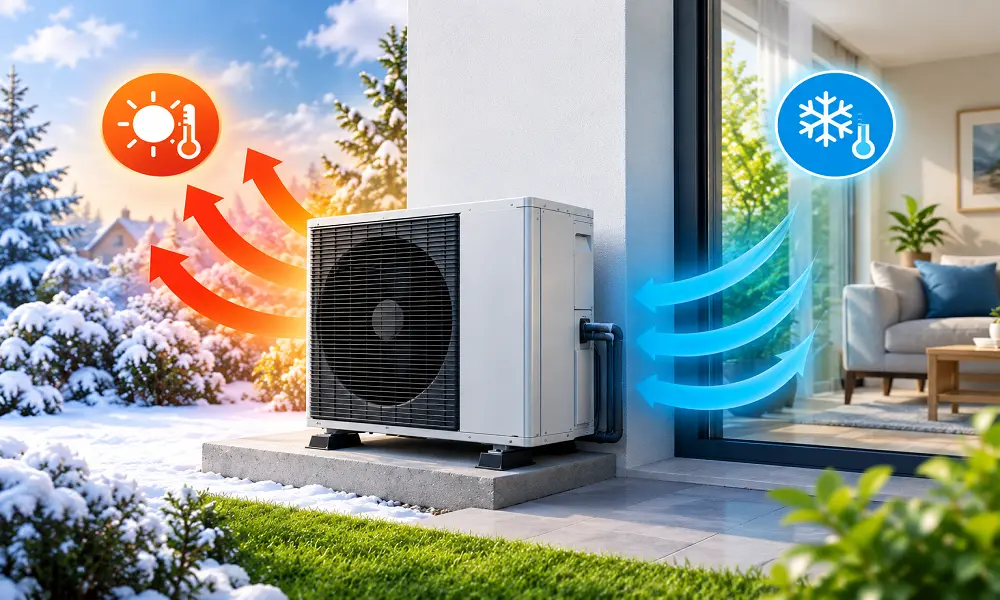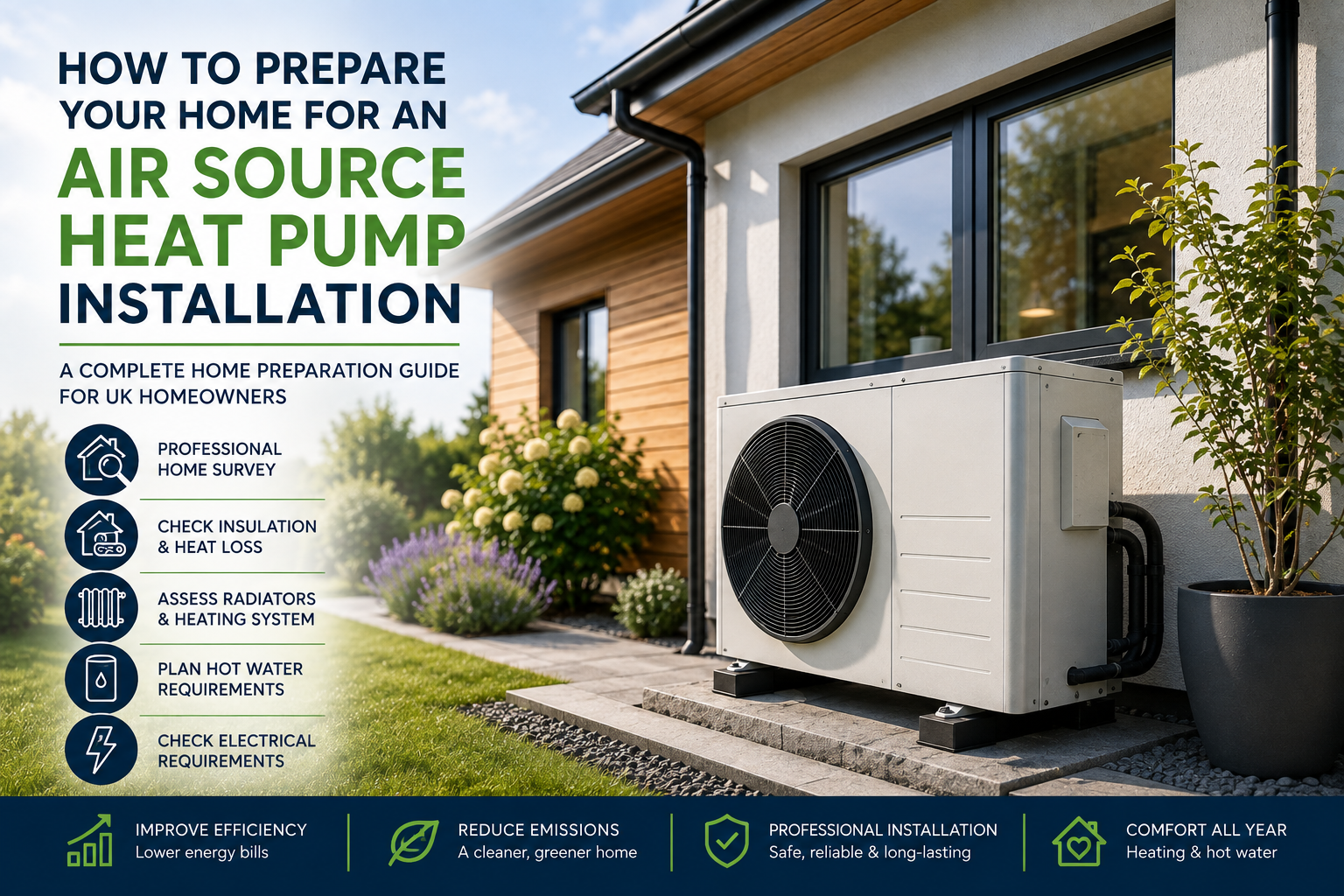

Air source heat pumps are becoming an increasingly popular option for UK homeowners who want a more efficient way to heat their homes. Unlike traditional heating systems that generate heat by burning fuel, an air source heat pump transfers heat from the outdoor air into your property. When properly designed and installed, the system can provide heating and hot water while helping reduce energy consumption and reliance on fossil fuels.
However, choosing a heat pump is only the first step. Preparing your property correctly can have a significant impact on installation, performance, comfort and long-term efficiency.
If you are considering an air source heat pump for your home, understanding what needs to be checked before installation can make the entire process much easier. From insulation and radiators to outdoor space and hot water requirements, several factors need to be considered before the system is installed.
Why Home Preparation Matters Before Installing a Heat Pump
An air source heat pump works differently from a conventional gas boiler. A boiler can quickly produce high-temperature water, while a heat pump generally works most efficiently by delivering heat at lower temperatures over longer periods.
That difference means your home’s existing heating system, insulation and overall energy efficiency need to be considered carefully.
A properly prepared property allows the heat pump to operate more efficiently and maintain a comfortable indoor temperature without unnecessary energy consumption.
At Wunergy, each installation should be assessed according to the individual property rather than relying on a one-size-fits-all approach. A professional survey can identify the home’s heating requirements and highlight any improvements that may be beneficial before installation.
1. Start With a Professional Home Survey
One of the most important steps is arranging a professional assessment before choosing your system.
Every property is different. A small terraced house has very different heating requirements from a large detached property, while an older building may require different improvements compared with a modern, well-insulated home.
A survey can consider factors such as:
- Property size and layout
- Number of rooms
- Existing heating system
- Insulation levels
- Windows and doors
- Existing radiators
- Hot water requirements
- Available outdoor space
- Electrical requirements
- Suitable location for the outdoor unit
- Expected heat loss from the property
This information helps determine the appropriate heat pump capacity.
Choosing a system simply because it has a particular kilowatt rating is not recommended. An oversized or undersized system may affect efficiency, comfort and operating costs.
2. Check Your Home’s Insulation
Insulation is one of the most important considerations when preparing a property for low-temperature heating.
Good insulation helps prevent heat from escaping through the roof, walls and floors. This reduces the amount of heat your heating system needs to replace.
Before installation, homeowners should consider whether their property has suitable:
- Loft insulation
- Cavity wall or solid wall insulation where appropriate
- Floor insulation
- Draught-proofing
- Efficient windows and doors
This does not necessarily mean that every part of the property must be upgraded before a heat pump can be installed. The right improvements depend on the property’s condition and the results of a professional assessment.
Improving insulation where appropriate can make it easier for a heat pump to maintain a stable indoor temperature.
3. Assess Your Existing Radiators
Your existing radiators may be suitable for use with a heat pump, but this depends on their size, design and the heat requirements of each room.
Because heat pumps generally operate at lower flow temperatures than traditional boilers, some properties may benefit from larger or higher-output radiators.
This is why radiator assessment should form part of the planning process.
Replacing every radiator is not automatically necessary. A professional installer can determine which radiators are appropriate and whether individual rooms require upgrades.
In some cases, only selected radiators may need to be replaced.
4. Consider Underfloor Heating
Underfloor heating can work particularly well with heat pumps because it provides a large surface area for distributing heat.
Instead of concentrating heat through relatively small radiators, underfloor heating distributes warmth across a larger floor area.
However, installing underfloor heating is a major project and is not essential for having an air source heat pump.
Existing radiators can work with a heat pump when the system is correctly designed.
If you are renovating your home at the same time as installing a heat pump, it may be worth discussing whether underfloor heating is appropriate for your property.
5. Think About the Outdoor Unit Location
An air source heat pump requires an outdoor unit to extract heat from the surrounding air.
The location of this unit should be considered carefully.
The installer may assess:
- Available outdoor space
- Airflow around the unit
- Distance from neighbouring properties
- Accessibility for maintenance
- Noise considerations
- Pipework routes
- Drainage
- The appearance of the installation
The unit should have sufficient airflow so it can operate effectively.
A professional installer will also consider practical requirements such as how the system connects to the indoor heating components.
Selecting the location early can help avoid unnecessary complications during installation.
6. Review Your Hot Water Requirements
Preparing for a heat pump is not only about heating rooms.
Most homes also need domestic hot water for showers, baths, washing and everyday household use.
Depending on your existing setup, installing an air source heat pump may involve adding or upgrading a hot water cylinder.
The size of the cylinder should reflect your household’s requirements.
A larger family may require greater hot water storage than a one- or two-person household.
Think about your typical hot water usage before the installation survey and discuss your requirements with your installer.
7. Understand How Your Heating Controls Will Change
Heat pumps are designed to work differently from traditional boilers, so homeowners may need to adjust their expectations around heating controls.
Instead of turning a boiler on for a short period to rapidly increase the temperature, a heat pump can be designed to provide steady, controlled heating.
Modern systems can also incorporate smart controls, allowing homeowners to manage heating more conveniently.
Wunergy’s systems include smart connected control options, allowing compatible systems to be managed through connected technology.
Understanding how the controls work is important because correct operation can contribute to efficient performance.
Your installer should explain the controls and show you how to use the system after commissioning.
8. Check Your Electrical Requirements
Although heat pumps are highly efficient, they still require electricity to operate.
Before installation, the electrical requirements of the proposed system should therefore be assessed.
Your installer can determine whether the existing electrical setup is suitable and identify any work that may be required.
This is another reason why a professional property survey is important. Electrical considerations should be identified before installation rather than discovered halfway through the project.
9. Prepare for Installation Work
Installing an air source heat pump involves more than placing a unit outside the house.
The installation can involve work around the outdoor unit, internal heating equipment, pipework, hot water storage and controls.
Wunergy states that typical installations can take around two to three days, although the exact duration depends on the property and the complexity of the project.
Before installation begins, homeowners should make sure installers have reasonable access to the required areas.
It can also be helpful to:
- Clear access routes
- Move fragile items away from working areas
- Make space around existing heating equipment
- Keep outdoor installation areas accessible
- Discuss any concerns with the installer beforehand
Good preparation can make the installation process more straightforward.
10. Understand the Boiler Upgrade Scheme
For eligible UK homeowners, government support can significantly reduce the upfront cost of an air source heat pump.
Wunergy currently promotes the Boiler Upgrade Scheme and states that it can handle the grant application process on behalf of eligible customers.
However, grant eligibility and scheme requirements can change, so homeowners should confirm the current rules and eligibility criteria before making financial decisions.
Working with an appropriately certified installer can also make the process easier because the installer can explain what support may be available and what documentation is required.
11. Choose an Experienced and Appropriately Certified Installer
The installer you choose can have a major influence on the quality of your heat pump installation.
Look beyond the equipment itself and consider the installation company’s experience, certifications, customer support and approach to system design.
Wunergy identifies itself as an MCS-certified installer and also lists Gas Safe, F-Gas, RECC and Ofgem-related credentials on its website.
A professional installer should be able to explain:
- Why a particular system has been recommended
- How the heat-loss calculation affects system sizing
- Whether radiators need upgrading
- What hot water system is appropriate
- Where the outdoor unit will be positioned
- What controls will be installed
- What maintenance is required
- What warranties and aftercare are available
Do not be afraid to ask questions before agreeing to an installation.
12. Think About Long-Term Maintenance
An air source heat pump is a long-term heating investment, so preparation should not stop once the installation is complete.
Regular maintenance can help identify potential problems before they become more serious.
Homeowners should keep the outdoor unit clear of leaves, debris and other obstructions and ensure that airflow is not restricted.
Professional servicing may also be appropriate depending on the system and manufacturer’s recommendations.
Wunergy notes that correctly installed and maintained heat pumps can provide many years of service, making ongoing care an important part of protecting the investment.
What Happens After Installation?
Once the installation is complete, the system needs to be commissioned correctly.
The installer should check that the equipment is operating as intended and that the heating controls are configured appropriately.
Homeowners should also receive guidance on how to operate the system.
This is an important stage because even an efficient heat pump can perform poorly if it is incorrectly configured or operated.
Take time to understand your heating schedule, temperature settings, hot water controls and any available smart features.
Common Mistakes to Avoid
Preparing your home properly can help avoid several common mistakes.
Choosing the cheapest quote without comparing the specification
A lower price does not necessarily represent better value. Compare what each quotation includes, such as system design, installation, controls, cylinder, radiator work and aftercare.
Selecting the wrong system size
Bigger does not automatically mean better. Correct sizing is based on the property’s heating requirements.
Ignoring insulation
Poor insulation can increase heat loss and make it harder for any heating system to maintain comfort.
Assuming all radiators must be replaced
Some homes may need radiator upgrades, while others may not. Allow the installer to assess each room.
Focusing only on the equipment price
The total project cost can include installation, hot water storage, controls, electrical work and other modifications.
Not learning how to use the system
Heat pumps have different operating characteristics from traditional boilers. Understanding the controls is essential for getting the best from the system.
Is Your Home Ready for an Air Source Heat Pump?
There is no single property type that automatically determines whether a heat pump is suitable.
Modern air source heat pumps can be used across a wide variety of UK properties, including terraces, semi-detached homes and detached houses. Wunergy provides systems for different property sizes and heating requirements, with its current range covering capacities from 6 kW to 32 kW.
The important question is not simply whether your house can have a heat pump, but which system configuration is appropriate for your property.
A professional survey is the best way to establish this.
Why Professional Installation Matters
An air source heat pump is a significant investment in your home’s heating infrastructure. Correct system design, installation and commissioning are therefore essential.
The best results come from treating the project as a complete heating solution rather than simply replacing one appliance with another.
Your property’s insulation, heat loss, radiators, hot water requirements, controls and outdoor space all need to work together.
Wunergy provides air source heat pump installation, servicing and maintenance, with services available across Birmingham and locations throughout the West Midlands.
Final Thoughts
Preparing your home for an air source heat pump does not have to be complicated.
Start with a professional assessment, understand your property’s heat-loss requirements, review insulation and radiators, consider your hot water needs and identify an appropriate location for the outdoor unit.
Most importantly, choose an installer who can provide proper system design, professional installation and ongoing support.
When the system is correctly sized, installed and operated, an air source heat pump can provide reliable heating and hot water while helping your household move towards a more energy-efficient and lower-carbon future.
For homeowners in Birmingham and the wider West Midlands considering the switch, Wunergy can assess your property and help determine whether an air source heat pump is the right heating solution for your home.
Frequently Asked Questions
Can an air source heat pump work with existing radiators?
Yes. Existing radiators can sometimes be used with an air source heat pump, although their output should be assessed because heat pumps typically operate at lower temperatures than traditional boilers.
Do I need to replace my boiler before installing a heat pump?
No. A heat pump installation replaces the role of your existing heating system, but the exact process depends on your property’s current setup and the proposed system design.
Does my home need to be fully insulated?
Not necessarily. However, good insulation can reduce heat loss and improve the overall efficiency of your heating system. A professional assessment can identify where improvements may be beneficial.
Does an air source heat pump need an outdoor space?
Yes. The system requires an outdoor unit that needs suitable airflow and an appropriate installation location.
How long does heat pump installation take?
Installation time varies according to the property and system. Wunergy states that a typical installation can take approximately two to three days.
Can heat pumps provide hot water as well as heating?
Yes. Air source heat pump systems can be designed to provide domestic hot water as well as space heating.
Are air source heat pumps suitable for older homes?
They can be, but suitability depends on the property’s construction, insulation, heat loss, existing heating system and other factors. A professional survey should be carried out before installation.
How can I find out if my home is suitable?
The most reliable approach is to arrange a professional home survey. The assessment can determine the property’s heating requirements and identify the appropriate system configuration.