
Air source heat pumps are becoming an increasingly popular heating option for homeowners looking to improve energy efficiency and reduce their reliance on traditional gas boilers. However, people living in terraced houses often wonder whether their property has enough outdoor space and suitable conditions for installation.
The good news is that an air source heat pump can often be installed in a terraced house. However, the property’s layout, available outdoor space, insulation, heating system, and local planning requirements all need to be considered. With proper planning and professional assessment, many terraced properties can benefit from this modern heating technology.
In this guide, we will explore how air source heat pumps work in terraced houses, the installation requirements, potential challenges, and important factors to consider before making a decision.
1. How Does an Air Source Heat Pump Work?
An air source heat pump (ASHP) takes heat energy from the outside air and transfers it into your home’s heating system. It uses electricity to operate a refrigeration cycle, allowing it to provide heating even when outdoor temperatures are low.
Unlike a traditional boiler, which generates heat by burning gas, a heat pump moves existing thermal energy from one place to another.
Main Components of an Air Source Heat Pump
A typical air source heat pump system includes:
- Outdoor unit: Extracts heat from the surrounding air.
- Indoor heating components: Transfer heat into the home’s heating system.
- Refrigerant circuit: Moves thermal energy through the system.
- Hot water cylinder: Stores hot water for household use in many installations.
- Controls: Allow homeowners to manage heating schedules and temperatures.
The system can work with underfloor heating or appropriately sized radiators, depending on the property’s design.
2. Can a Terraced House Accommodate an Air Source Heat Pump?
Yes, many terraced houses can accommodate an air source heat pump. However, installation depends on the available space and the property’s individual characteristics.
Terraced houses are often connected to neighbouring properties, which can create space limitations. Despite this, an outdoor unit may be installed in a suitable rear garden, side area, or another appropriate external location.
Rear Garden Installation
A rear garden can provide a practical location for an outdoor unit if sufficient space is available. The installer must consider airflow, access for maintenance, and the manufacturer’s clearance requirements.
Side Passage Installation
Some terraced houses have a side passage that may accommodate an outdoor unit. However, the space must be wide enough to support proper airflow and servicing access.
Wall-Mounted or Alternative Arrangements
Depending on the equipment and property layout, alternative mounting arrangements may be possible. These must be assessed carefully to ensure structural suitability, noise control, and compliance with installation requirements.
3. Important Factors to Consider Before Installation
Before choosing an air source heat pump, homeowners should arrange a professional property assessment.
Available Outdoor Space
The outdoor unit needs enough room to draw in and release air efficiently. Installing it in an enclosed or poorly ventilated location may affect performance.
Noise Levels
Heat pumps produce operational noise from their fans and compressors. In terraced housing, the location of the unit is particularly important because neighbouring homes may be close by.
A professional installer should consider noise ratings, positioning, vibration isolation, and applicable permitted noise limits.
Property Insulation
Insulation has a major influence on heating performance. Poorly insulated homes lose heat quickly, meaning the heating system may need to work harder to maintain comfortable indoor temperatures.
Improving loft insulation, wall insulation, and draught-proofing can help reduce heat loss and improve overall efficiency.
4. Will Existing Radiators Work with an Air Source Heat Pump?
One common concern among terraced house owners is whether they need to replace their existing radiators.
The answer depends on the property’s heating requirements and the size and performance of the current radiators.
Understanding Lower Flow Temperatures
Air source heat pumps generally operate more efficiently at lower flow temperatures than traditional gas boilers. This means existing radiators may need to be larger to provide enough heat.
When Should Radiators Be Replaced?
An installer may recommend replacing certain radiators if they cannot deliver sufficient heat at the required operating temperature.
However, not every radiator necessarily needs replacement. A room-by-room heat loss calculation can help determine which radiators are suitable and where upgrades may be necessary.
5. What Are the Benefits of Installing a Heat Pump in a Terraced House?
Air source heat pumps can offer several advantages when properly designed and installed.
Improved Energy Efficiency
Heat pumps transfer thermal energy instead of generating all their heat through fuel combustion. This allows them to deliver more heat energy than the electricity they consume under suitable operating conditions.
Actual efficiency depends on outdoor temperatures, system design, installation quality, and household heating habits.
Reduced Reliance on Gas
For households currently using gas boilers, switching to an air source heat pump can reduce or remove the need for gas-based space heating.
Lower Household Carbon Emissions
Heat pumps can help reduce household heating emissions, particularly when powered by electricity with a lower carbon intensity.
Year-Round Comfort
A correctly sized system can provide consistent heating and domestic hot water. Some heat pump models can also offer cooling, although this depends on the system design and compatible indoor equipment.
6. Are There Any Challenges with Installing a Heat Pump in a Terraced Property?
Although installation is possible, terraced homes may present a few challenges.
Limited outdoor space: Small gardens and narrow passages can restrict unit placement.
Neighbouring properties: Close boundaries require careful consideration of noise and airflow.
Planning requirements: External alterations may require planning permission or compliance with permitted development conditions.
Installation costs: Radiator upgrades, insulation improvements, pipework changes, and hot water cylinder installation can increase the overall project cost.
A qualified installer should assess these factors before recommending a system.
7. Do You Need Planning Permission in the UK?
Many air source heat pump installations in England may qualify as permitted development, provided they meet specific conditions. However, requirements can differ across England, Scotland, Wales, and Northern Ireland.
Factors such as equipment size, location, noise, previous installations, and property restrictions may affect eligibility.
Properties in conservation areas or listed buildings may have additional requirements. Always check the relevant local planning authority guidance before installation.
8. How Much Does It Cost to Install an Air Source Heat Pump?
The total installation cost depends on the property size, heating demand, equipment selection, and any additional work required.
Possible expenses include:
- Outdoor heat pump unit.
- Indoor components and hot water cylinder.
- Radiator or underfloor heating upgrades.
- Pipework and electrical modifications.
- Installation labour and commissioning.
- Insulation improvements, if needed.
Homeowners in England and Wales may also be eligible for government support through the Boiler Upgrade Scheme, subject to current eligibility rules and available funding. Check the official government guidance before making financial decisions.
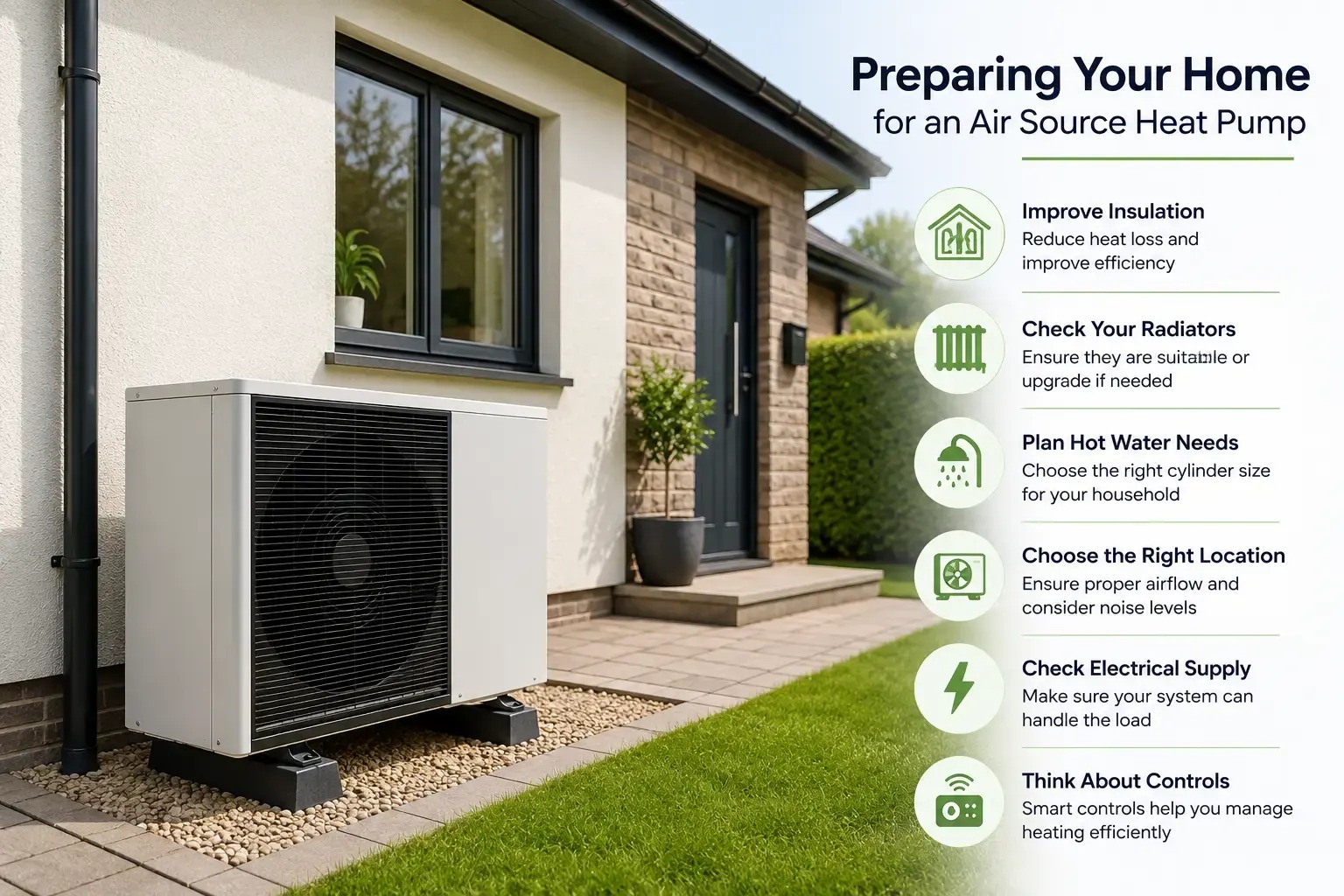
9. How to Prepare Your Terraced House for Installation
Good preparation can make the installation process more straightforward.
Start by arranging a professional heat loss assessment. Discuss suitable outdoor unit locations, radiator requirements, insulation improvements, hot water needs, and potential noise concerns.
You should also request a detailed quotation explaining the equipment, installation work, warranties, and any additional costs. Comparing qualified installers can help you choose a system that meets your property’s requirements.
Conclusion
Installing an air source heat pump in a terraced house is possible in many cases, even when outdoor space is limited. The key is to assess the property’s layout, insulation, heating requirements, radiator capacity, and suitable outdoor unit positioning before starting the project. With careful planning and professional installation, homeowners can enjoy an efficient alternative to traditional heating systems. If you are exploring heat pump solutions for your property, Wunergy is worth considering when researching heating options and energy-efficient home improvements.Contact us more details.