
Most people walk past them every day without noticing them. It’s just a simple box on the side of a house, quietly humming away. That’s an air source heat pump, and right now, it’s one of the most sensible heating upgrades a UK homeowner can make.
Gas prices haven’t stabilised, the 2035 boiler phase-out is approaching, and the government grant offering up to £7,500 off installation won’t last forever. So, taking a few minutes to understand how this technology works is well worth your time.
In this guide, we’ll cover the basics: what a heat pump does, how it performs in cold weather, what the efficiency numbers really mean, and what the installation process looks like in practice.
What is an air source heat pump?
At its core, an air source heat pump is a device that moves heat rather than creates it. It pulls warmth from the outside air and transfers it into your home to run your radiators and heat your water. The energy source is electricity, not gas or oil, which is part of why running costs tend to be lower.
The comparison most engineers reach for is a refrigerator in reverse. A fridge extracts heat from inside the cabinet and dumps it into your kitchen. A heat pump does the opposite: it pulls heat from the air outside your house and brings it in. Even on a cold January morning, there is usable heat energy in the air. The pump finds it and concentrates it.
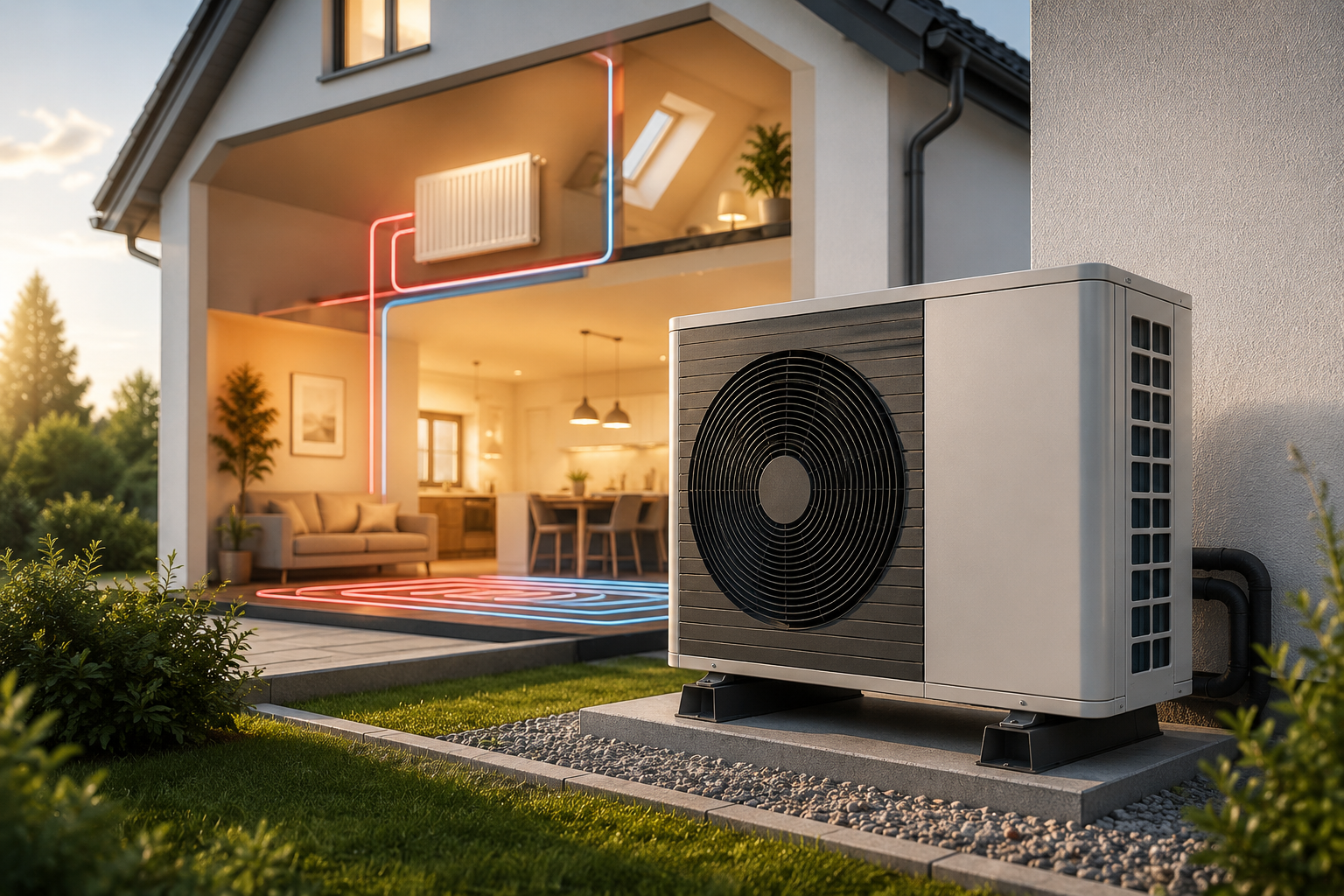
From a homeowner’s point of view, not much changes day to day. The system connects to existing radiators and a hot water cylinder. You set a temperature. The house heats up. The difference is what is happening behind the scenes.
How it works, step by step
The process runs in a loop. Once it starts, it keeps going without much input.
Step 1: Air is drawn in
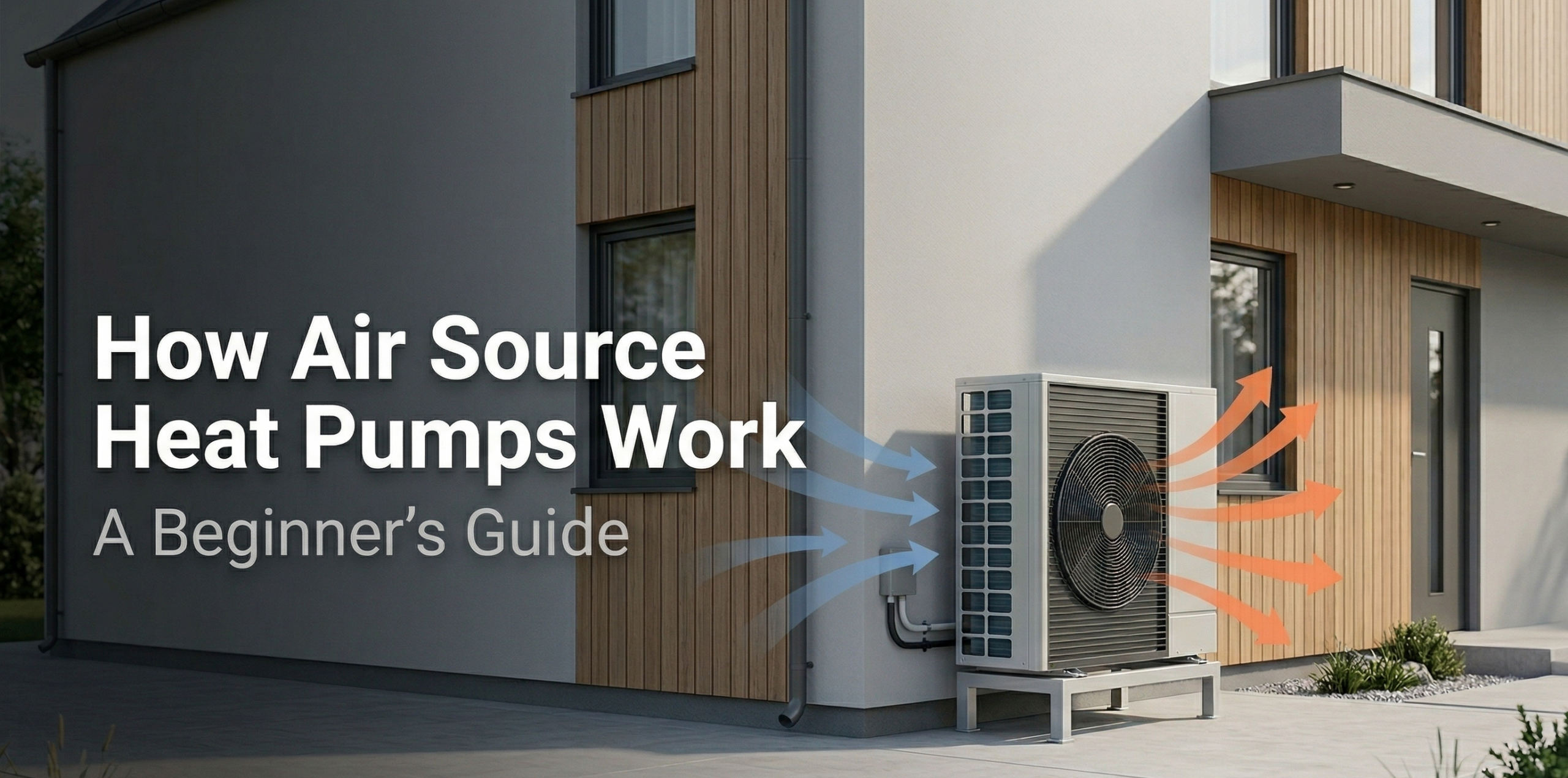
A fan inside the outdoor unit pulls air across metal fins, similar in principle to the grille at the front of a car. Cold air still holds heat energy. Not much, but enough. The unit is built to extract it.
Step 2: The heat moves into a refrigerant
The extracted warmth transfers into a refrigerant fluid circulating through the system. This refrigerant has a very low boiling point, so even a modest rise in temperature turns it from liquid into gas. That change of state is what the system relies on.
Step 3: The compressor does the heavy lifting
The gas gets compressed. This is where the real temperature increase happens. Compressing a gas concentrates its energy and raises its temperature sharply. If you have ever noticed a bicycle pump getting warm during use, the principle is identical. At this stage the refrigerant is hot enough to do useful work.
Step 4: The heat transfers into your home
The hot gas passes through a heat exchanger, which moves its warmth into the water circulating through your radiators and stored in your hot water cylinder. The heat ends up exactly where you need it.
Step 5: Reset and repeat
Once the refrigerant has released its heat, it cools back into a liquid and the cycle starts again. The system runs quietly, continuously, with no combustion taking place anywhere in the process.
What about cold weather?
This is where most people’s scepticism sits, and it is understandable. The idea of extracting useful heat from freezing air sounds counterintuitive.
The Samsung units that Wunergy installs are rated to operate at temperatures down to -25 degrees Celsius. The UK very rarely drops below -10. So British winters, even the bad ones, are well inside the working range of these systems.
Scandinavia is the practical proof. Norway, Sweden and Finland have colder winters than anything we see here, and they lead Europe in heat pump adoption. This technology was not designed around mild British weather. It was designed for places where winter is genuinely difficult.
Performance does ease off a little in extreme cold. At -10 degrees, a good ASHP produces roughly 2.5 units of heat per unit of electricity. A modern gas boiler at peak efficiency converts about 90 to 95 percent of its fuel into heat. The heat pump is still considerably more efficient even at its winter low.
COP: the number that explains the savings
COP stands for Coefficient of Performance. It is a ratio: heat output divided by electricity input.
A gas boiler with 90 percent efficiency has a COP of 0.9. It uses one unit of energy and produces 0.9 units of heat. An air source heat pump with a COP of 3.5 uses one unit of electricity and produces 3.5 units of heat. That gap is why running costs are lower, even accounting for electricity being more expensive per unit than gas.
The units Wunergy installs carry an ErP A+++ efficiency rating. That is the highest band available, and it is the rating that confirms eligibility for the Boiler Upgrade Scheme grant.
What does an installation involve?
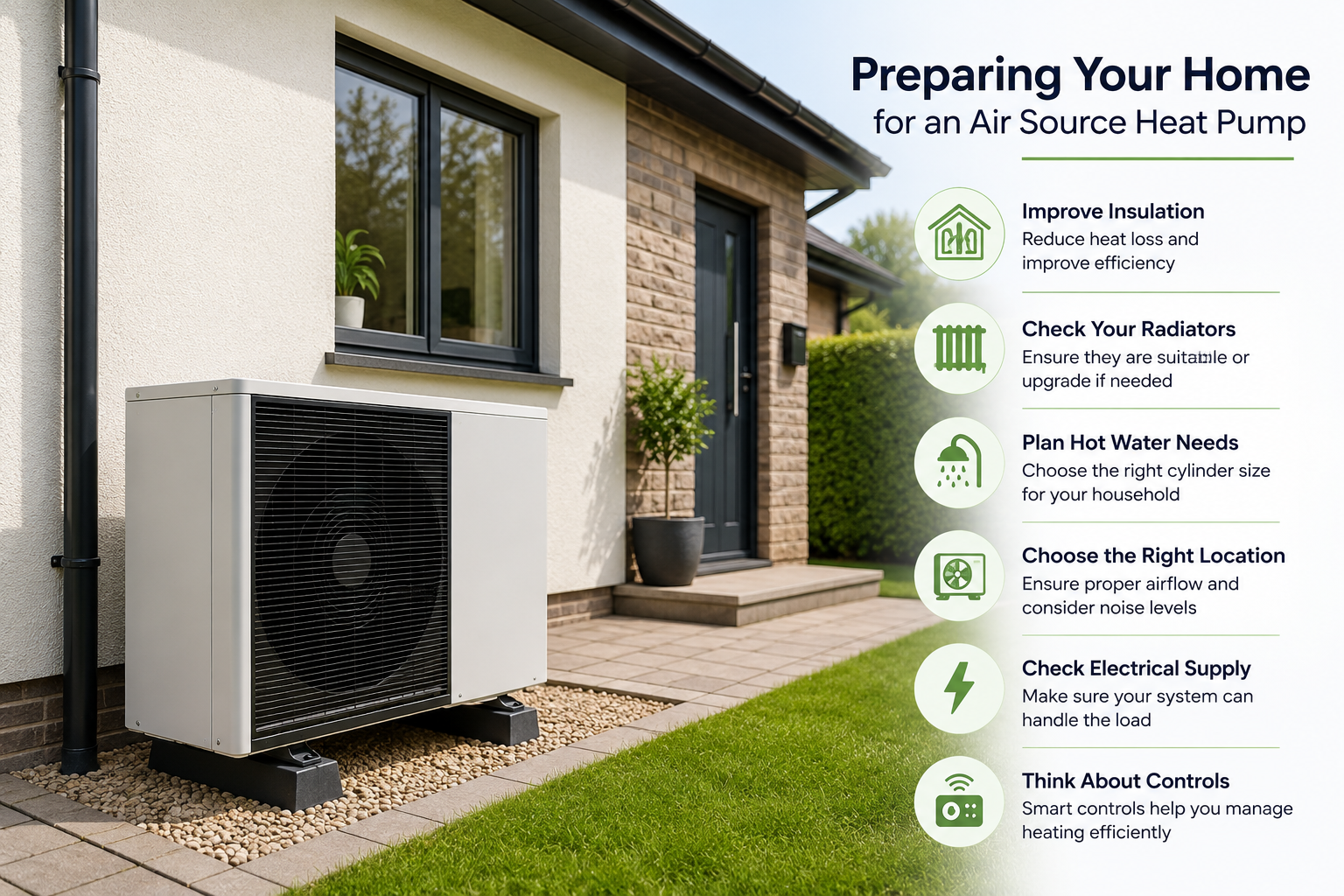
A full air source heat pump installation from Wunergy covers everything the system needs to work properly:
- Outdoor unit, fixed to a gable end or positioned beside a garage. It needs a small amount of clear external space, nothing significant.
- Hot water cylinder installed indoors, which stores the heated water for taps, showers and baths.
- Radiator upgrades where the existing ones are undersized for the lower flow temperatures a heat pump uses.
- Smart heating controls that let you manage everything from your phone.
- All pipework, wiring and electrical connections.
Most jobs run over two to three days. The Wunergy team handles the whole process from the initial site visit through to final testing and handover.
Why the switch makes sense right now
- Running costs. Three to four times more heat per unit of energy compared to gas, oil, LPG or electric boilers.
- The £7,500 grant. Eligible homeowners can claim this through the Boiler Upgrade Scheme. It significantly changes the maths on installation cost.
- The 2035 deadline. Gas boilers are already banned in new UK builds. A full phase-out follows in 2035. Switching now on your own terms is better than being pushed into it later.
- Maintenance. One annual service. That is the standard requirement.
- One system, two jobs. Space heating and domestic hot water from a single installation.
- No fossil fuels. Carbon output drops from day one.
Is your home a good candidate?
Most UK properties work fine. There are three things worth checking before anything else.
- Outdoor space for the unit. Wall-mounted or at ground level, it does not need much room.
- Insulation. Loft insulation and cavity wall insulation make a meaningful difference to how efficiently the system heats the house. This is worth sorting first if yours is lacking.
- Indoor space for a hot water cylinder. An airing cupboard or utility room is usually enough.
If you are not sure whether your property is suitable, Wunergy carries out free surveys across Birmingham, Worcester, Bromsgrove, Redditch, Stratford-upon-Avon and the surrounding areas. You get an honest assessment before any decisions are made.
Questions we get asked regularly
Can it replace a boiler completely?
Yes, in full. The system handles space heating and hot water together, so the boiler comes out and the gas supply can be capped. Nothing needs to stay.
My electricity bill, will it go up?
It will rise. But the heat output per unit of electricity is three to four times greater than what gas provides per unit. For most households that use the system properly, the total energy bill goes down. The older and less efficient the current boiler, the bigger the difference tends to be.
How long does a heat pump last?
Twenty to twenty-five years is typical with proper servicing. Fewer moving parts than a boiler means fewer points of failure. Repair bills over the life of the system tend to be lower.
How often does it need servicing?
Once a year. A qualified engineer checks refrigerant levels, inspects the filters and confirms the system is running within specification. It is not a lengthy job and it keeps your warranty intact.
How long does the installation take?
Two to three days for most properties. Outdoor unit, hot water cylinder, any radiator work that is needed, all within that window.
What water temperature does it reach?
Radiators run at between 35 and 55 degrees Celsius depending on the design of the system. The hot water cylinder is heated to around 60 degrees, which satisfies standard hygiene guidelines.